Squalene Bulk Supply for Industrial Use
China Factory Direct
 |
|
| CAS number | 111-02-4 |
| Product name | Squalene |
| Stock | Stock readily available; annual supply capacity exceeding 1,000 tons. |
| Grade | Pharmaceutical GradeFood Grade |
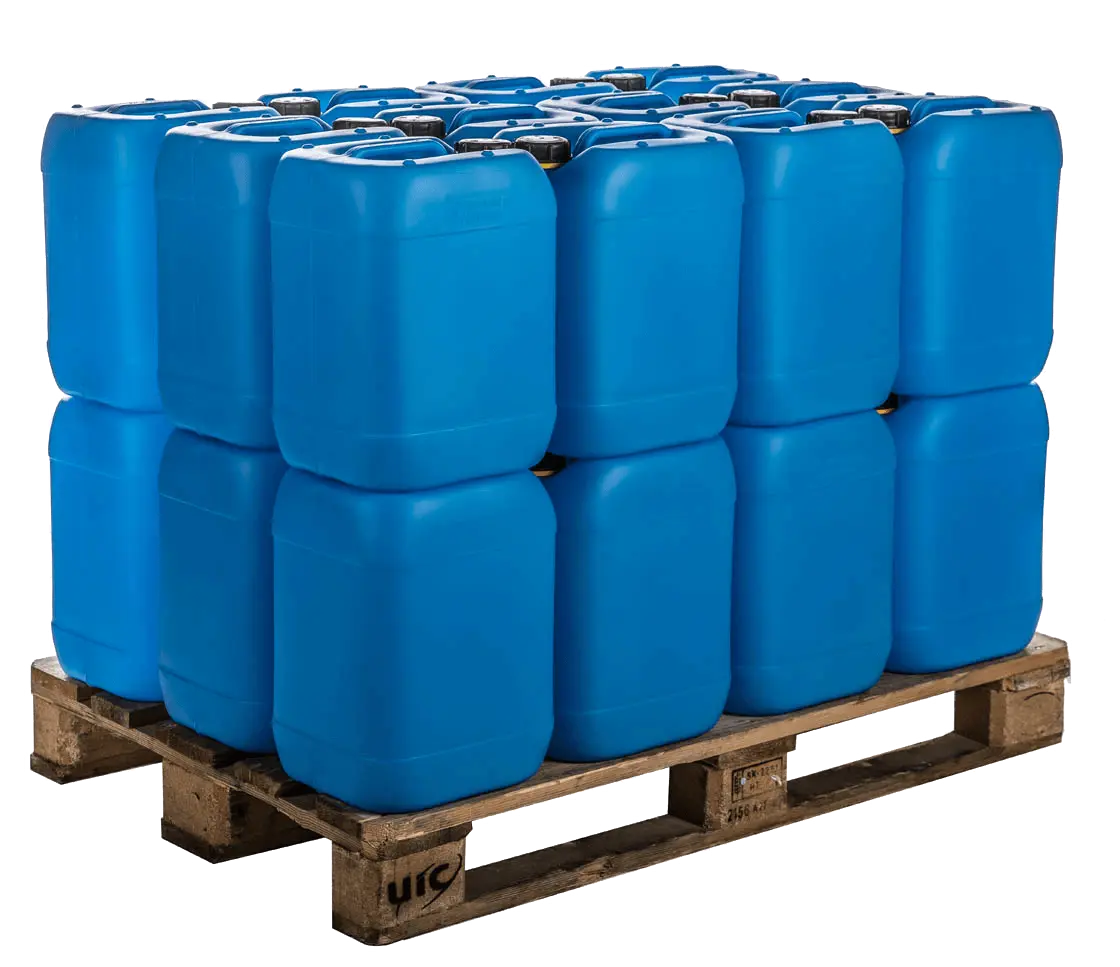
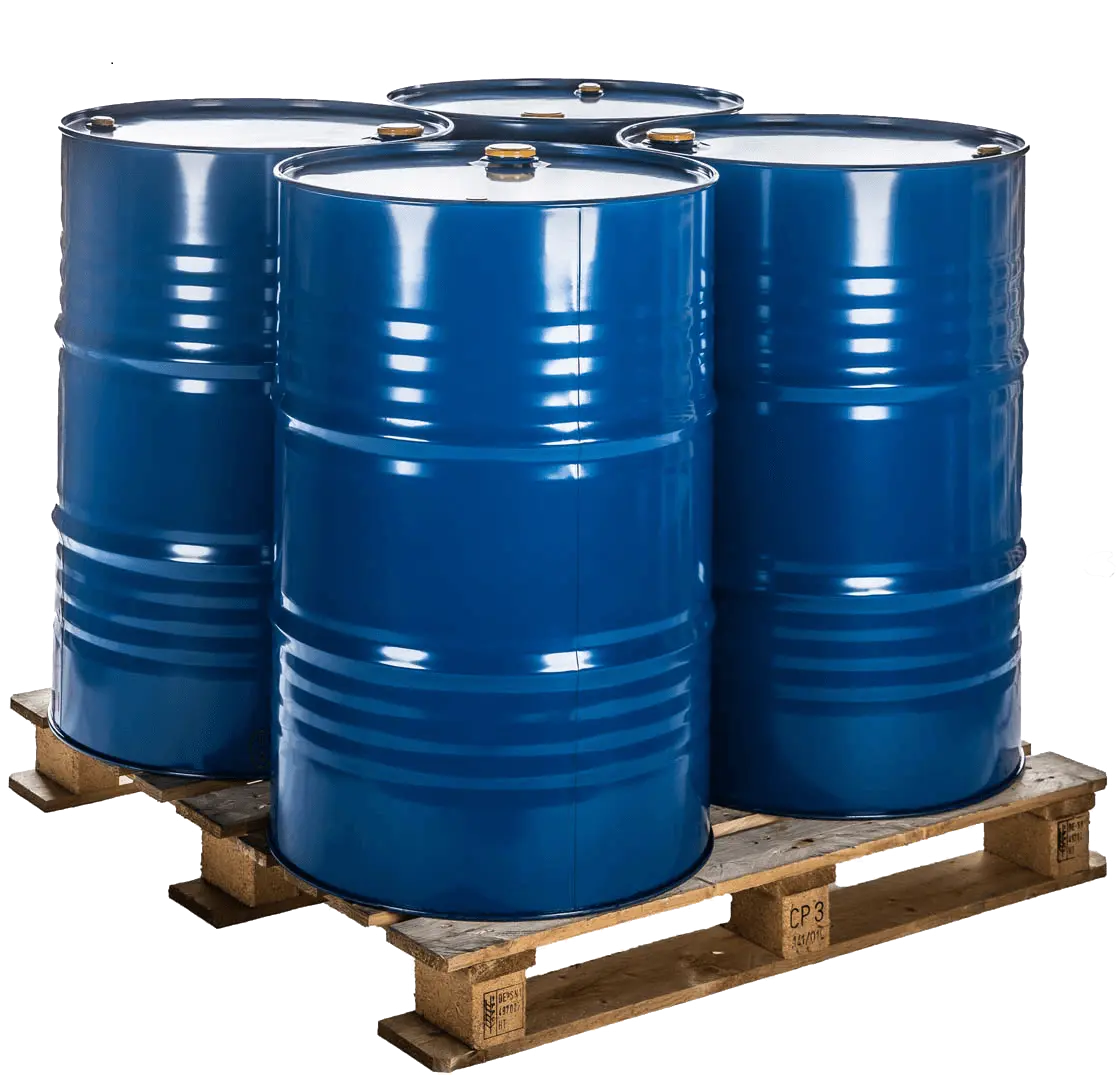
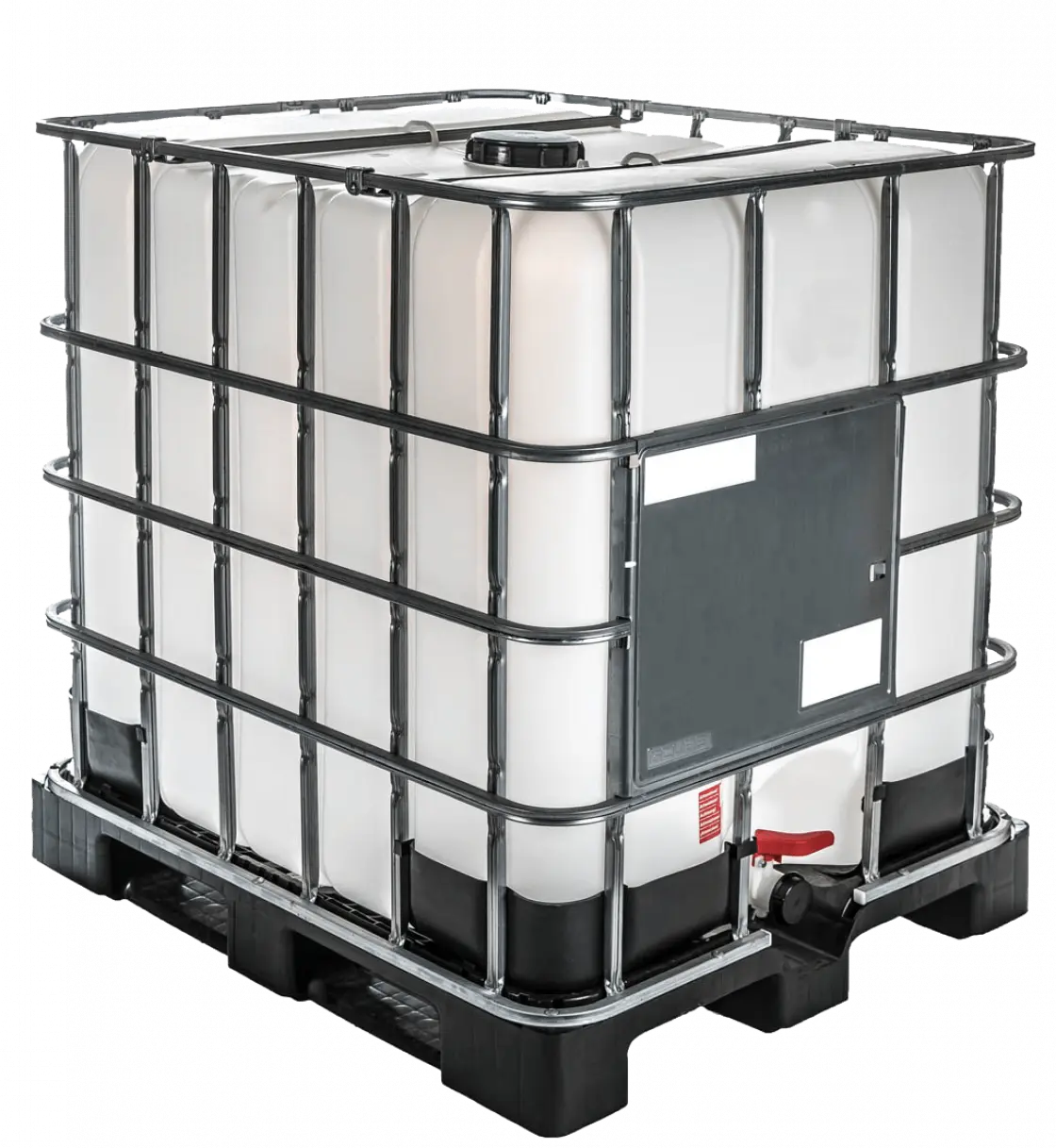
| Packaging | 25L/drum200L/drum1000L/IBC |
| Sample | Test Samples Available (Click to Request Samples) |
| COA | View COA |
| Price | Get Quote |
| Supply Type | Bulk / Contract manufacturing / OEM |
| Shipping | FCL / LCL available |
| Payment Terms | Support FOB \ CIF \ EXW quotations, and accept Letter of Credit (L/C). |
| Manufacturer | Greenrock Chemical(China Factory) |






QUOTE TYPE
PACKAGING TYPE
TOTAL QUANTITY(KG)
PREFERRED SHIPPING METHOD
YOUR COMPANY
YOUR E-MAIL
Calculate Summary
Based on current marketvolatility and material availability.
Documents We Provide for Squalene
Post-sale: Full documentation is provided.
To request documents, please contact us via email at sales@GRchemical.com.
Bulk Squalene Supplier from China
17+ years in chemical exports.Fully compliant, reliable supply.Your B2B partner in bulk chemical procurement.
Industrial Applications of Squalene
| Industry | Application | Process |
|---|---|---|
| Cosmetics | Skin conditioning agent, antioxidant, humectant | Incorporated as an active ingredient into formulations such as creams, serums, and sunscreens; typically solubilized in the oil phase (e.g., squalane, plant oils) at 0.1–5% w/w prior to emulsification into the final product |
| Pharmaceuticals | Drug delivery vehicle, vaccine adjuvant, liposomal membrane component | Used in the preparation of lipid nanoparticles (LNPs) or liposomes via thin-film hydration or ethanol injection methods to enhance solubility and bioavailability of hydrophobic drugs |
| Nutritional Supplements | Dietary antioxidant supplement, precursor for coenzyme Q10 synthesis | Formulated into tablets or capsules following microencapsulation or co-blending with vitamin E; typical oral dosage is 10–40 mg/day |
| Life Science Research | Cell culture additive, inducer of oxidative stress models | Dissolved in DMSO to a stock solution, then diluted into culture medium to achieve a final concentration of 1–10 μM for modulation of the SREBP pathway or simulation of endogenous lipid metabolism states |
Manufacturing Quality Control of Squalene
| Test Item | Common Testing Methods | Method Overview |
|---|---|---|
| Content Determination | Gas Chromatography (GC) | Separates trans-squalene from other components using a capillary column, with flame ionization detection (FID) for quantification. External or internal standard calibration (e.g., triacontane) is applied, offering high sensitivity and excellent reproducibility; this method is recommended in pharmacopoeias. |
| Isomer Purity (cis/trans) | Gas Chromatography-Mass Spectrometry (GC-MS) | Combines GC separation with mass spectrometric detection. Characteristic fragment ions (e.g., m/z 41, 69, 204, 274) confirm the structure of trans-squalene, which is compared with reference standards to quantify the proportion of trans isomers and distinguish cis isomers. |
| Impurity Testing | High-Performance Liquid Chromatography (HPLC) | Uses a C18 reversed-phase column with gradient elution of acetonitrile/water. Detects possible oxidation products (e.g., squalene epoxide), residual solvents, or other impurities from plant oils. Suitable for non-volatile impurity analysis. |
| Moisture Content | Karl Fischer Titration | Quantitatively determines trace water via reaction between iodine, sulfur dioxide, pyridine, and methanol. Ensures that squalene has not absorbed moisture or undergone hydrolysis during storage, meeting pharmaceutical-grade standards (typically ≤0.1%). |
| Acid Value | Acid-Base Titration | Titration of free fatty acids in the sample using potassium hydroxide in ethanol solution. Acid value (mg KOH/g) reflects oxidative degradation; pharmaceutical-grade squalene typically requires acid value ≤0.5 mg KOH/g. |
| Peroxide Value | Iodometric Method | Measures primary oxidation products by utilizing peroxides to oxidize potassium iodide and liberate iodine, followed by titration with sodium thiosulfate. Assesses oxidative stability; pharmaceutical-grade requirement is typically ≤10 meq/kg. |
| Melting Point / Solidification Point | Melting Point Apparatus or Automatic Pour Point Analyzer | Determines physical constants of trans-squalene (typical melting point: -75°C to -65°C), used for preliminary identification and purity assessment. Pure samples exhibit a sharp melting range. |
| Refractive Index | Refractometry | Measures refractive index at 20°C or 25°C (typical value n₂₀/D ≈ 1.485–1.490), serving as a rapid screening indicator for purity. Highly sensitive to impurities. |
| UV Absorption Spectrum | Ultraviolet-Visible Spectrophotometry (UV-Vis) | Trans-squalene exhibits characteristic absorption peaks at 225–235 nm (ε ≈ 25,000–30,000 L·mol⁻¹·cm⁻¹), confirming the conjugated diene structure. Absorption above 270 nm indicates oxidation or impurity contamination. |
| Heavy Metal Residue | Atomic Absorption Spectroscopy (AAS) or ICP-MS | After sample digestion, levels of lead, cadmium, mercury, arsenic, and other heavy metals are determined. Compliance with pharmacopoeial limits (e.g., Pb ≤ 5 ppm) for pharmaceutical excipients (e.g., ChP, USP). |
Technical Specifications of Squalene
| Test Item | Specification |
|---|---|
| Appearance | Colorless to pale yellow liquid |
| Purity | >=98.5% (GC-MS) |
| Water Content (KF) | <=0.5% |
| Refractive Index (n20/D) | 1.492–1.498 |
| Relative Density (20°C/25°C) | 0.856–0.862 g/cm³ |
| Total Impurities | <=1.5% |
| Single Impurity | <=0.5% |
| Odor | Characteristic mild odor |
 Specifications vary by industry. Reach out to our technical experts for a COA tailored specifically to your application. Email:selse@GRchemical.com
|
|
Download COA of Squalene
| CAS/Product ID | *Required fields | |
| Lot/Batch Number | *Required fields | |
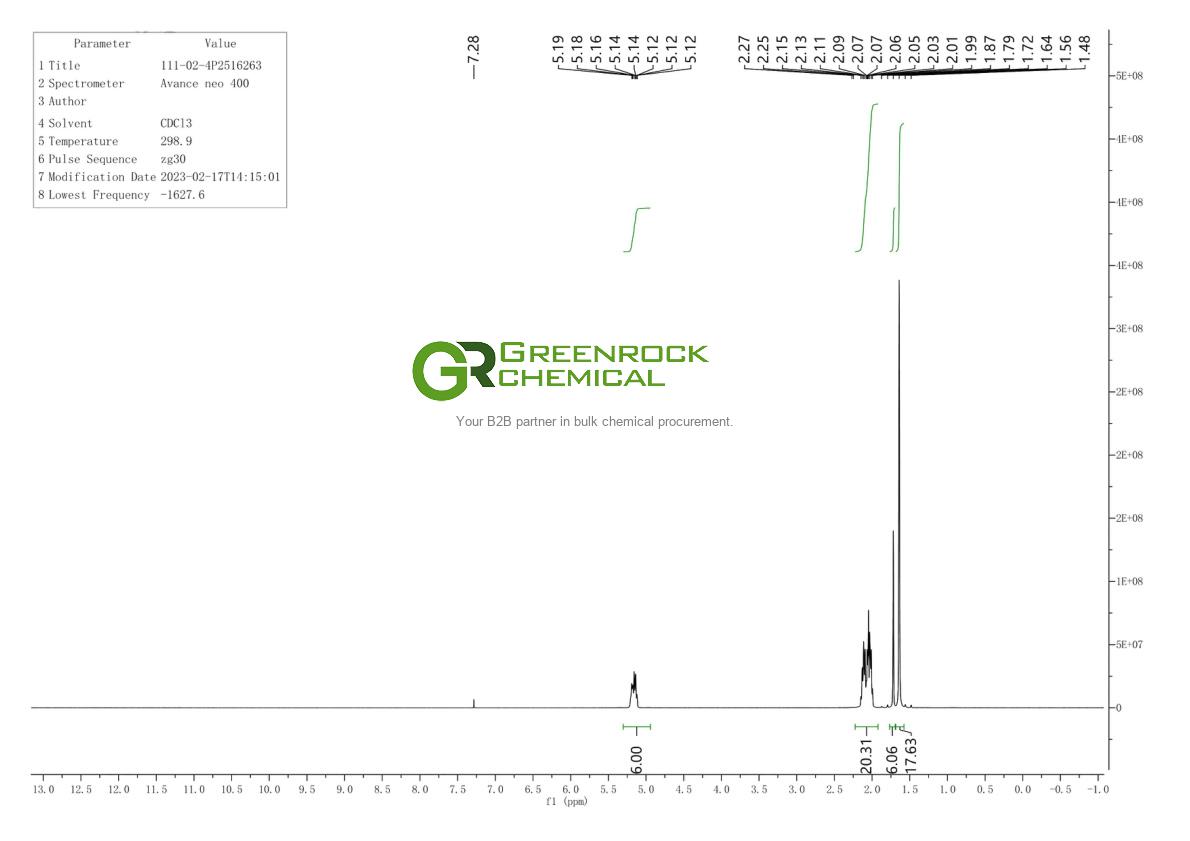
NMR Spectra of Squalene

Packaging of Squalene
Industrial Squalene Procurement FAQ
1. How do you ensure product quality consistency?
We rely on a mature China-based manufacturing system and implement strict batch control and quality inspection for every shipment. Our production process complies with ISO 9001 standards, and a COA is provided for each batch to ensure consistent and reliable quality.
2. Do you offer competitive pricing for bulk orders?
Yes, as a China-based manufacturer and bulk supplier, we provide tiered pricing based on order volume. We support FOB and CIF quotations, as well as L/C payment terms for large transactions to meet international trade requirements.
3. Can you support large-volume or long-term supply?
We have stable production capacity and a well-established supply chain, enabling continuous bulk supply. We support ton-level and container-level orders, as well as long-term cooperation projects.
4. What is your typical lead time?
For in-stock products, shipment can be arranged within 1–3 days. For bulk packaging or customized orders, lead time depends on the specific quantity and production schedule.
5. What documents do you provide?
We can provide complete documentation upon request, including COA, SDS, TDS, and other compliance certificates, meeting industrial procurement and export requirements.
6. Can you customize product specifications or packaging?
Yes, we support customization of parameters such as purity, impurities, residual solvents, and heavy metals. We also offer various bulk packaging options, including 25kg bags, drums, and IBC tanks, suitable for industrial applications and transportation.
7. What shipping options do you support?
We support both FCL (Full Container Load) and LCL (Less than Container Load) shipments, and can flexibly arrange logistics solutions based on order size to meet bulk chemical export needs.
8. Do you provide technical or application support?
Yes, we provide basic application guidance and technical support based on industry experience to help customers optimize product usage.
9. How do you handle compliance and export regulations?
We are familiar with international trade and export regulations, ensuring all products comply with relevant requirements. We also provide complete documentation to support smooth customs clearance and global delivery.
Use Bulk
Supply Factory
Direct ISO 9001
Certified Samples
Available Stable
Supply