Methyl Oleate Bulk Supply for Industrial Use
China Factory Direct
 |
|
| CAS number | 112-62-9 |
| Product name | Methyl Oleate |
| Stock | Stock readily available; annual supply capacity exceeding 1,000 tons. |
| Grade | Industrial Grade |
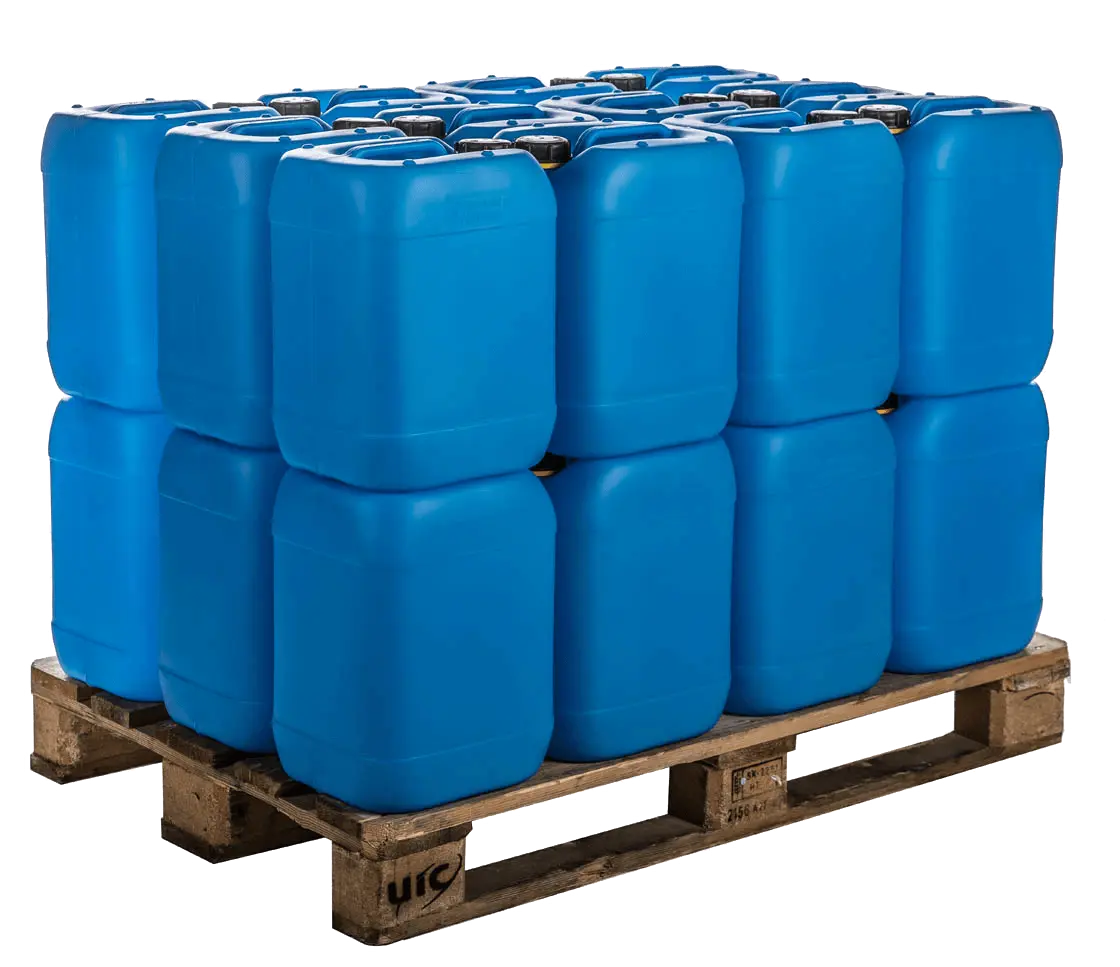
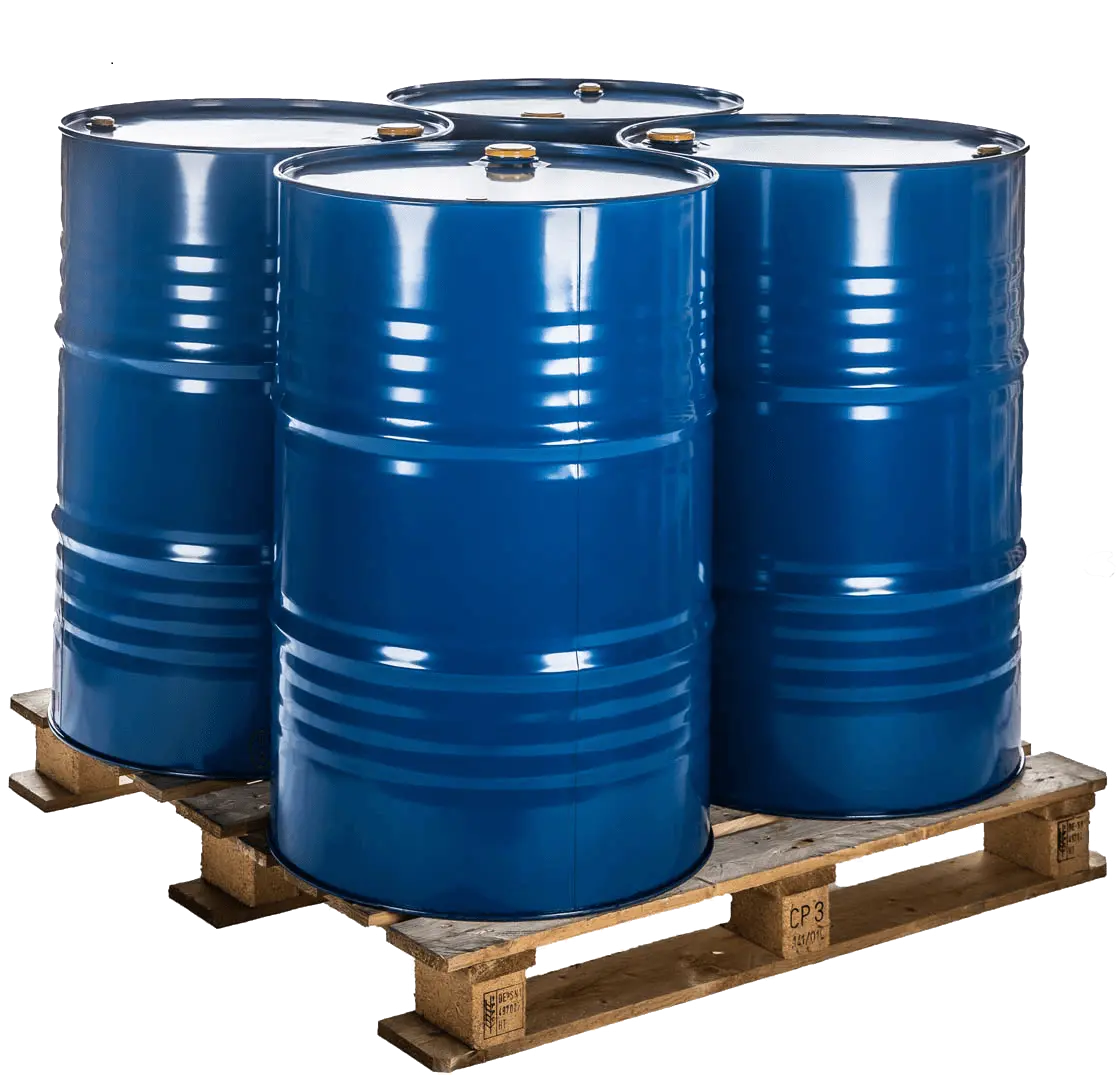
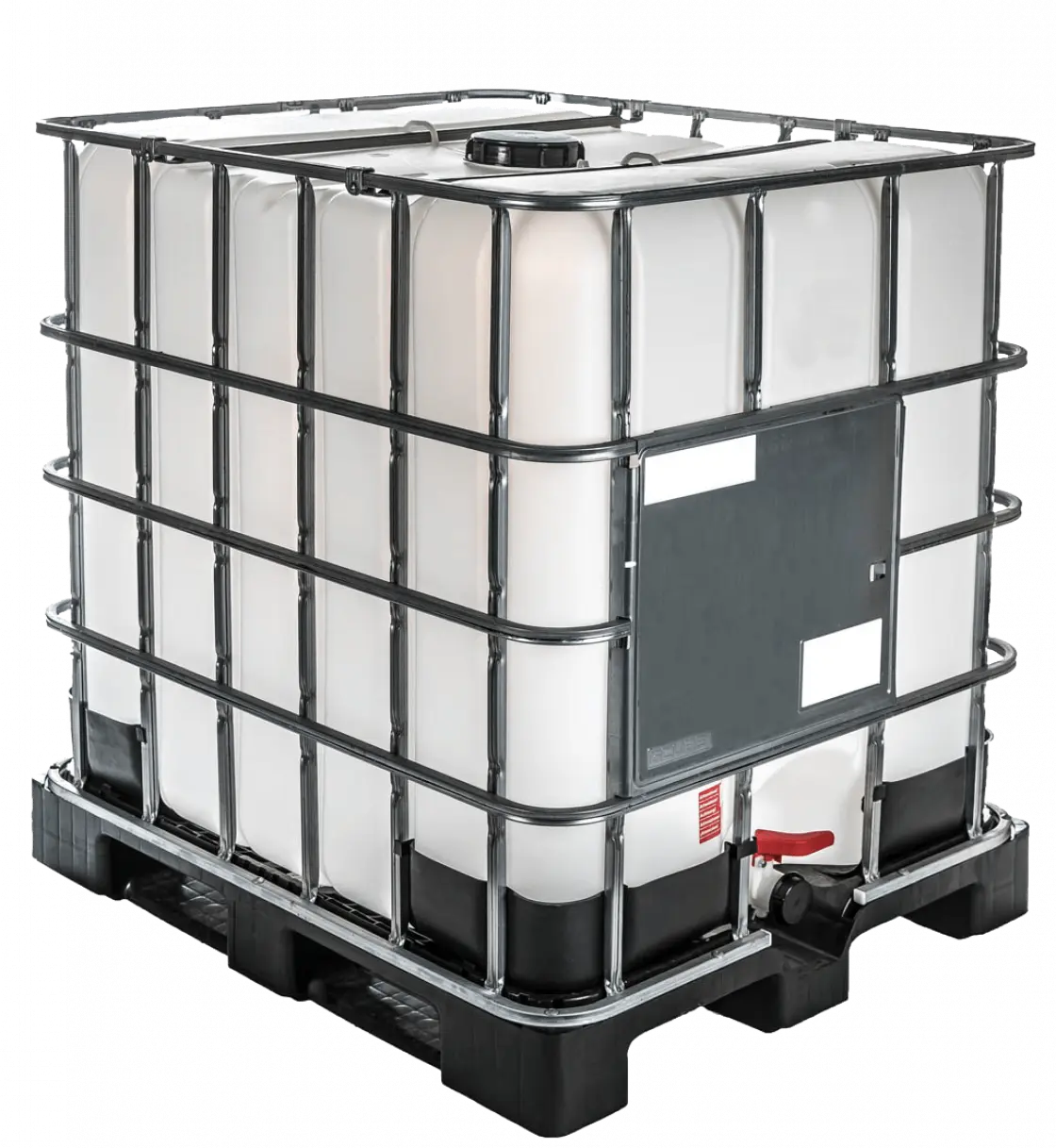
| Packaging | 25L/drum200L/drum1000L/IBC |
| Sample | Test Samples Available (Click to Request Samples) |
| COA | View COA |
| Price | Get Quote |
| Supply Type | Bulk / Contract manufacturing / OEM |
| Shipping | FCL / LCL available |
| Payment Terms | Support FOB \ CIF \ EXW quotations, and accept Letter of Credit (L/C). |
| Manufacturer | Greenrock Chemical(China Factory) |






QUOTE TYPE
PACKAGING TYPE
TOTAL QUANTITY(KG)
PREFERRED SHIPPING METHOD
YOUR COMPANY
YOUR E-MAIL
Calculate Summary
Based on current marketvolatility and material availability.
Documents We Provide for Methyl Oleate
Post-sale: Full documentation is provided.
To request documents, please contact us via email at sales@GRchemical.com.

Bulk Methyl Oleate Supplier from China
17+ years in chemical exports.Fully compliant, reliable supply.Your B2B partner in bulk chemical procurement.
Industrial Applications of Methyl Oleate
| Industry | Applications | Process |
|---|---|---|
| Cosmetics & Personal Care | Emulsifier, penetration enhancer, lubricant, solvent | Used as an oil-phase ingredient in creams, lotions, and shampoos, leveraging its excellent spreading properties and skin permeability to formulate stable emulsions via emulsification. |
| Pharmaceutical Industry | Ointment base, transdermal absorption enhancer, pharmaceutical excipient | Used as a base component in ointments or creams, leveraging its drug solubilizing capacity and skin permeation enhancement to formulate topical preparations via mixing and emulsification. |
| Surfactant Industry | Intermediate for anionic surfactants (e.g., sodium fatty alcohol ethoxysulfate) | Converted into surfactants via sulfation (to introduce hydrophilic groups) or sulfonation, for use in detergent and cleaner formulations. |
| Textile Printing & Dyeing | Fiber lubricant, softener, dye solvent | Formulated into fiber lubricants via compounding to reduce fiber abrasion, leveraging its superior lubricity and softness; alternatively used as a solvent in dye dispersion systems. |
| Leather Chemicals | Fatliquor, softener | Formulated into fatliquors via emulsion compounding, leveraging its strong affinity for leather fibers to impart softness, fullness, and elasticity to leather. |
| Coatings & Inks | Pigment dispersant, film-forming aid, resin modifier | Used as a colorant dispersant or modifying monomer during grinding and dispersion to leverage its pigment solubilizing effect and viscosity reduction, improving coating leveling and adhesion. |
| Agrochemical Industry | Pesticide solvent, penetration enhancer, synergist | Used in emulsifiable concentrate and water-emulsion formulations via emulsification or dissolution to enhance pesticide adhesion and penetration on plant surfaces, leveraging its spreading and penetration properties. |
| Biodiesel & Energy | Biodiesel component, fuel additive | Produced as a primary biodiesel component via transesterification of vegetable or animal oils with methanol, improving fuel low-temperature flow properties and combustion performance. |
| Metalworking | Metal cutting fluid, rust inhibitor base oil | Formulated into water-based or oil-based cutting fluids via compounding and emulsification, leveraging its lubricating and corrosion-inhibiting properties to provide lubrication, cooling, and rust protection during machining. |
Manufacturing Quality Control of Methyl Oleate
| Test Item | Common Test Method | Method Overview |
|---|---|---|
| Appearance | Visual Inspection | Place the sample in a transparent container and observe its color, clarity, and presence of suspended particles or precipitates under natural light or standard illumination. Suitable for assessing product purity and processing quality. |
| Color (Hue) | Platinum-Cobalt Colorimetric Method (GB/T 3143) | Determine the color grade of methyl oleate by comparison with standard platinum-cobalt solutions, reflecting the degree of refinement and impurity content. |
| Density | Densimeter or Pycnometer Method | Measure mass per unit volume at a specified temperature (e.g., 20°C) to verify compositional consistency and purity. |
| Refractive Index | Abbe Refractometer Method | Measure refractive index at standard temperature (usually 20°C or 25°C) as a physical constant indicator for identifying substance purity and composition. |
| Acid Value (Acid Number) | Acid-Base Titration (GB/T 5530) | Titrate free fatty acids in the sample using standardized potassium hydroxide ethanol solution; calculate milligrams of KOH consumed per gram of sample to reflect extent of hydrolysis. |
| Ester Content | Gas Chromatography (GC) | Use capillary column gas chromatograph to separate components, and quantify methyl oleate content via internal standard or area normalization method; offers high accuracy. |
| Moisture Content | Karl Fischer Method | Precisely determine trace water content using an electrochemical reaction; suitable for quality control of samples with low moisture levels. |
| Saponification Value | Reflux Titration Method | Reflux sample with excess KOH ethanol solution for saponification, then titrate residual alkali with standard acid to calculate the amount of KOH required for complete saponification (mg/g). |
| Iodine Value | Wijs Method | Determine degree of unsaturation through halogen addition reaction; assess number of double bonds based on iodine absorption, indicating oxidative stability. |
| Peroxide Value | Iodometric Method (GB/T 5538) | In acidic conditions, peroxides oxidize potassium iodide to release iodine, which is then titrated with sodium thiosulfate standard solution to measure early-stage oxidation level. |
| Impurities and Residual Solvents | Gas Chromatography-Mass Spectrometry (GC-MS) | Separate and identify potentially residual organic solvents or other volatile impurities to ensure product safety. |
| Unsaponifiable Matter | Diethyl Ether Extraction and Gravimetric Method | After saponification, extract unsaponifiable components (e.g., sterols, hydrocarbons) with organic solvent, dry and weigh to evaluate by-products or impurity levels. |
Technical Specifications of Methyl Oleate
| Test Item | Specification |
|---|---|
| Appearance | Colorless liquid |
| Purity | >=98.5% (GC, mixture of isomers) |
| Water Content (KF) | <=0.5% |
| Acid Value (mg KOH/g) | <=0.5 |
| Refractive Index (n20/D) | 1.445–1.449 |
| Relative Density (20°C/25°C) | 0.870–0.876 g/cm³ |
| Color (APHA/Pt-Co) | <=10 |
| Odor | Characteristic fatty odor |
 Specifications vary by industry. Reach out to our technical experts for a COA tailored specifically to your application. Email:selse@GRchemical.com
|
|
Download COA of Methyl Oleate
| CAS/Product ID | *Required fields | |
| Lot/Batch Number | *Required fields | |
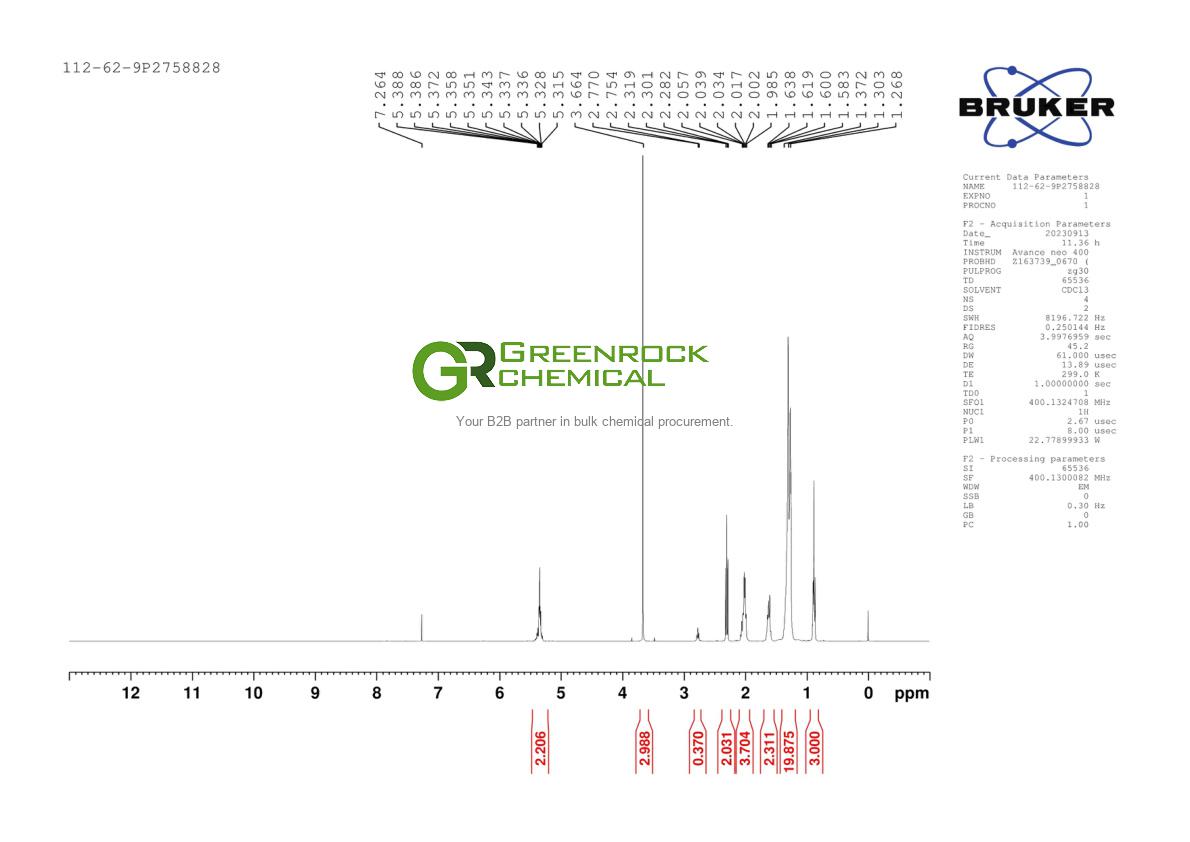
NMR Spectra of Methyl Oleate

Packaging of Methyl Oleate
Industrial Methyl Oleate Procurement FAQ
1. How do you ensure product quality consistency?
We rely on a mature China-based manufacturing system and implement strict batch control and quality inspection for every shipment. Our production process complies with ISO 9001 standards, and a COA is provided for each batch to ensure consistent and reliable quality.
2. Do you offer competitive pricing for bulk orders?
Yes, as a China-based manufacturer and bulk supplier, we provide tiered pricing based on order volume. We support FOB and CIF quotations, as well as L/C payment terms for large transactions to meet international trade requirements.
3. Can you support large-volume or long-term supply?
We have stable production capacity and a well-established supply chain, enabling continuous bulk supply. We support ton-level and container-level orders, as well as long-term cooperation projects.
4. What is your typical lead time?
For in-stock products, shipment can be arranged within 1–3 days. For bulk packaging or customized orders, lead time depends on the specific quantity and production schedule.
5. What documents do you provide?
We can provide complete documentation upon request, including COA, SDS, TDS, and other compliance certificates, meeting industrial procurement and export requirements.
6. Can you customize product specifications or packaging?
Yes, we support customization of parameters such as purity, impurities, residual solvents, and heavy metals. We also offer various bulk packaging options, including 25kg bags, drums, and IBC tanks, suitable for industrial applications and transportation.
7. What shipping options do you support?
We support both FCL (Full Container Load) and LCL (Less than Container Load) shipments, and can flexibly arrange logistics solutions based on order size to meet bulk chemical export needs.
8. Do you provide technical or application support?
Yes, we provide basic application guidance and technical support based on industry experience to help customers optimize product usage.
9. How do you handle compliance and export regulations?
We are familiar with international trade and export regulations, ensuring all products comply with relevant requirements. We also provide complete documentation to support smooth customs clearance and global delivery.
Use Bulk
Supply Factory
Direct ISO 9001
Certified Samples
Available Stable
Supply