1-OCTANESULFONIC ACID, SODIUM SALT, MONOHYDRATE Bulk Supply for Industrial Use
China Factory Direct
 |
|
| CAS number | 207596-29-0 |
| Product name | 1-OCTANESULFONIC ACID, SODIUM SALT, MONOHYDRATE |
| Stock | Stock readily available; annual supply capacity exceeding 1,000 tons. |
| Grade | Pharmaceutical GradeMaterial GradeSpecialty GradeReagent Grade |
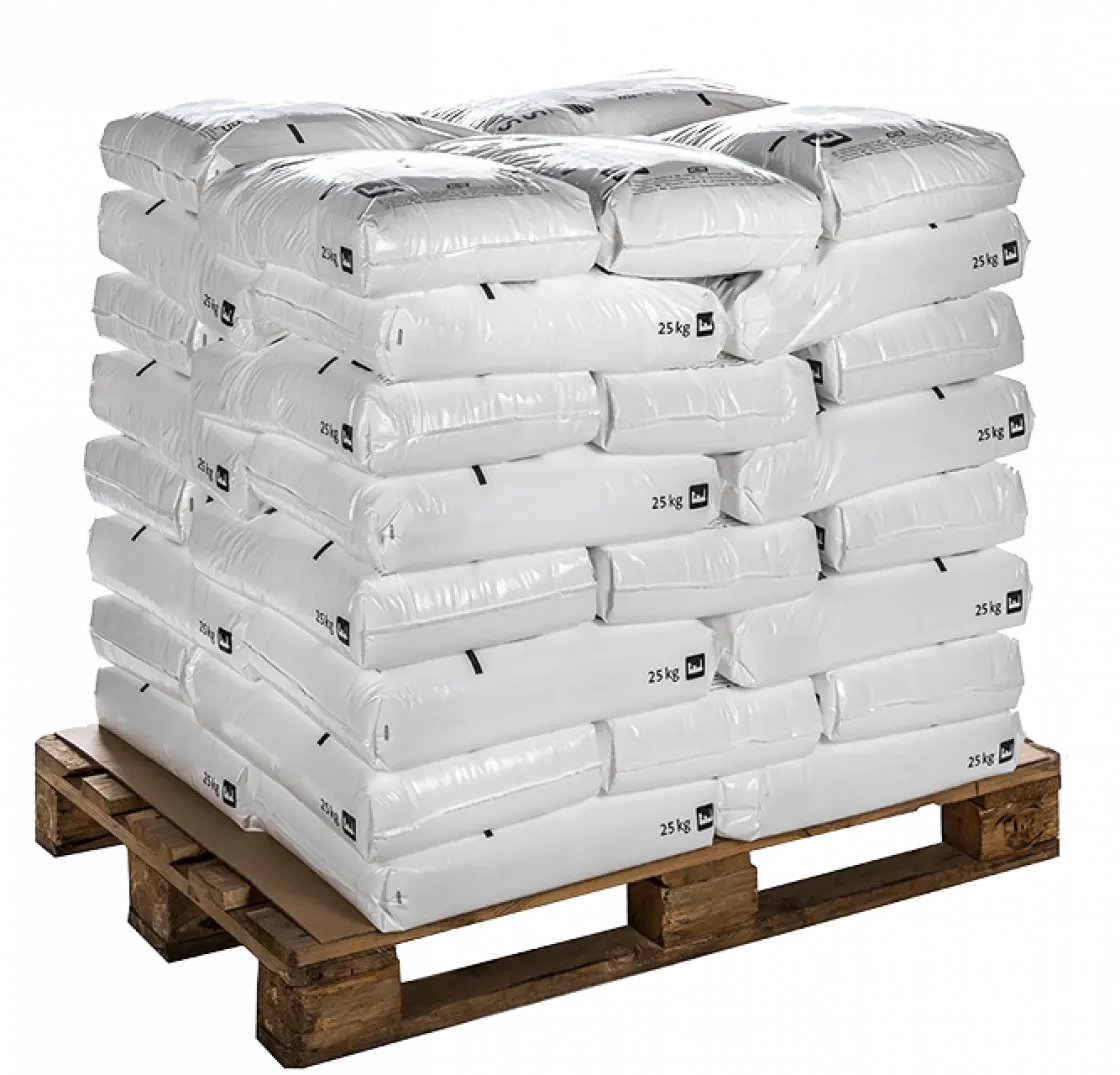
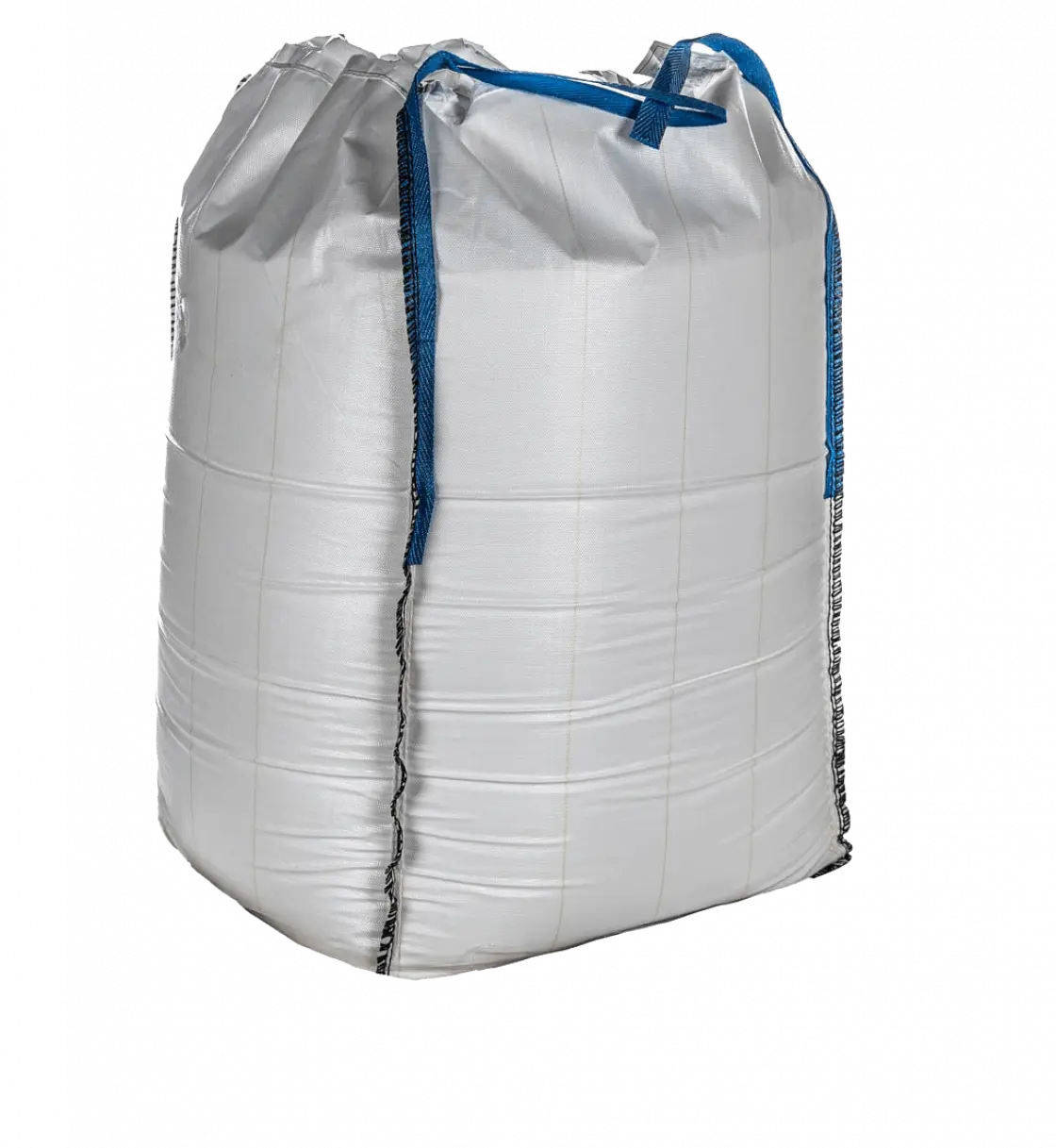
| Packaging | 25KG/bag500KG/bag1000KG/bag |
| Sample | Test Samples Available (Click to Request Samples) |
| COA | View COA |
| Price | Get Quote |
| Supply Type | Bulk / Contract manufacturing / OEM |
| Shipping | FCL / LCL available |
| Payment Terms | Support FOB \ CIF \ EXW quotations, and accept Letter of Credit (L/C). |
| Manufacturer | Greenrock Chemical(China Factory) |






QUOTE TYPE
PACKAGING TYPE
TOTAL QUANTITY(KG)
PREFERRED SHIPPING METHOD
YOUR COMPANY
YOUR E-MAIL
Calculate Summary
Based on current marketvolatility and material availability.
Documents We Provide for 1-OCTANESULFONIC ACID, SODIUM SALT, MONOHYDRATE
Post-sale: Full documentation is provided.
To request documents, please contact us via email at sales@GRchemical.com.

Bulk 1-OCTANESULFONIC ACID, SODIUM SALT, MONOHYDRATE Supplier from China
17+ years in chemical exports.Fully compliant, reliable supply.Your B2B partner in bulk chemical procurement.
Industrial Applications of 1-OCTANESULFONIC ACID, SODIUM SALT, MONOHYDRATE
| Industry | Application | Process |
|---|---|---|
| Pharmaceuticals | Used as an ion-pairing reagent in high-performance liquid chromatography (HPLC) for the separation of basic compounds | Added to the mobile phase to form ion pairs with analytes, improving chromatographic peak shape and retention behavior |
| Analytical Chemistry | Used as a surfactant or electrolyte additive to optimize electrophoretic separation | Incorporated into buffer solutions for capillary electrophoresis (CE) or ion chromatography to modulate separation selectivity |
| Materials Science | Used as a templating or structure-directing agent in the synthesis of mesoporous materials | Guides the formation of ordered pore structures during sol-gel processing and is subsequently removed by calcination |
| Biochemistry | Used in reversed-phase chromatography for the separation of proteins or peptides to enhance hydrophobic interactions | Employed as an ion-pairing reagent in liquid chromatography mobile phases to improve separation efficiency and resolution |
Manufacturing Quality Control of 1-OCTANESULFONIC ACID, SODIUM SALT, MONOHYDRATE
| Test Item | Common Test Method | Method Summary |
|---|---|---|
| Appearance | Visual Inspection | Observe the color and physical state of the sample. Qualified products are typically white crystalline powders, free from visible impurities. |
| Assay | High-Performance Liquid Chromatography (HPLC) | Reverse-phase HPLC using a C18 column as the stationary phase and a UV detector (e.g., 210 nm or 254 nm). The assay is performed via external standard or normalization method. The mobile phase commonly consists of methanol and buffer salts (e.g., phosphate or ammonium acetate). |
| Moisture Content | Karl Fischer Titration | Quantitative determination of water content using Karl Fischer reagent. Suitable for compounds containing water of crystallization; accurately measures both bound and free water in monohydrates. |
| Purity (Related Substances) | High-Performance Liquid Chromatography (HPLC) | Using the same conditions as for assay, detect impurity peaks other than the main peak to evaluate types and levels of organic impurities (e.g., unreacted starting materials, degradation products). Typically, individual impurities should be ≤0.5% and total impurities ≤1.0%. |
| Sulfated Ash (Residue on Ignition) | Gravimetric Method (Ignition Residue) | The sample is ignited at high temperature until constant weight is achieved, and the mass of residual inorganic matter is measured to assess inorganic impurity content. Acceptance limit is typically ≤0.2%. |
| Chlorides | Ion Chromatography or Turbidimetry | Ion chromatography provides precise measurement of chloride ion content; turbidimetry estimates chloride levels semi-quantitatively based on the turbidity of silver chloride precipitate, used to control inorganic anion impurities. |
| pH Value | pH Meter Method | Dissolve the sample into a solution of specified concentration (e.g., 1% w/v aqueous solution), then measure the pH using a calibrated pH meter. Typical range is 5.0–7.5. |
| Heavy Metals | Atomic Absorption Spectroscopy (AAS) or ICP-MS | After sample digestion, determine total content of heavy metal elements such as lead, cadmium, mercury, and arsenic, ensuring compliance with pharmacopeial or customer-specified limits (e.g., ≤10 ppm). |
| Sulfate | Ion Chromatography or Turbidimetry | To confirm the presence of sulfonic acid groups and detect excess sulfate impurities. Ion chromatography offers higher accuracy. |
| Particle Size Distribution | Laser Diffraction Analysis | Used to control solubility and process suitability, especially important when the product is used as an ion-pairing reagent affecting chromatographic behavior. |
Technical Specifications of 1-OCTANESULFONIC ACID, SODIUM SALT, MONOHYDRATE
| Test Item | Specification |
|---|---|
| Appearance | White to almost white powder or crystals |
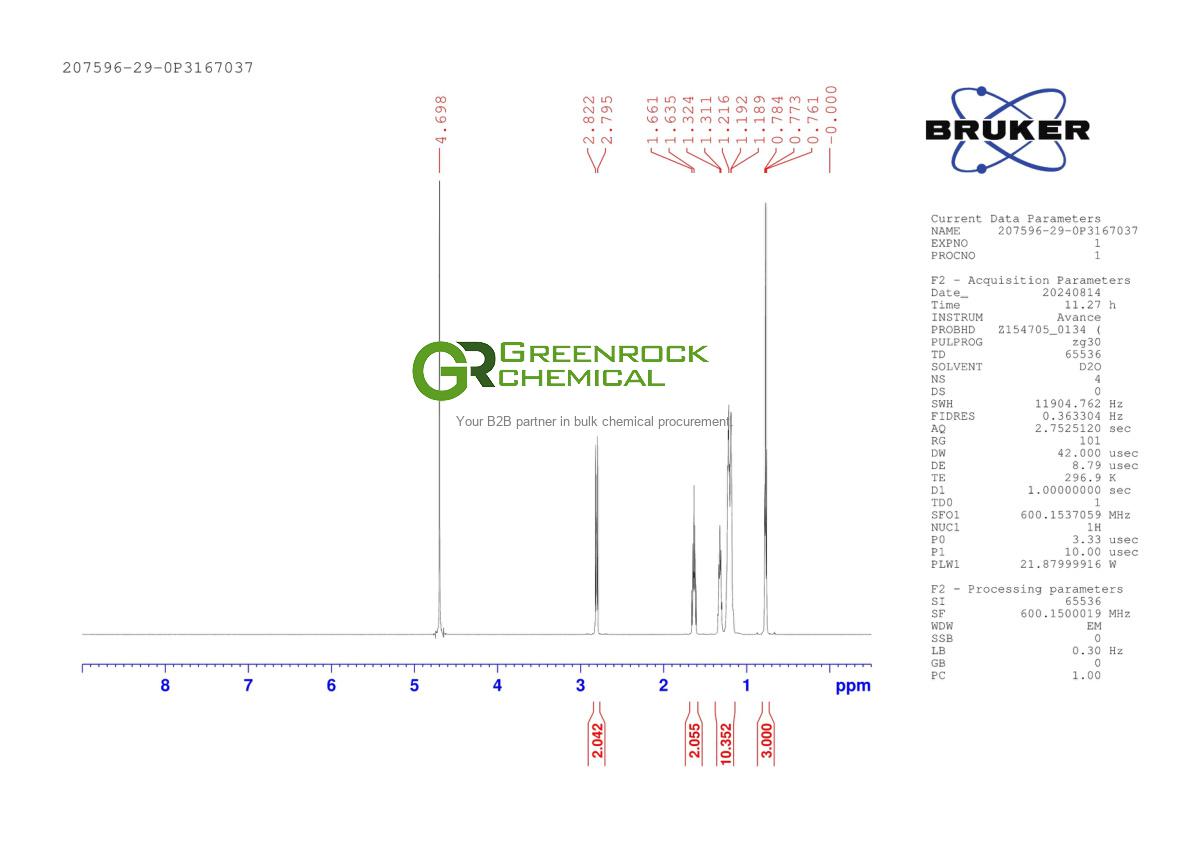
| Purity | >=98.0% (by NMR) |
| Water Content (KF) | <=0.5% |
| Total Impurities | <=2.0% |
| Single Impurity | <=0.5% |
| Heavy Metals | <=10 ppm |
| Residue on Ignition | <=0.1% |
| Odor | Characteristic, mild sulfonate odor |
 Specifications vary by industry. Reach out to our technical experts for a COA tailored specifically to your application. Email:selse@GRchemical.com
|
|
Download COA of 1-OCTANESULFONIC ACID, SODIUM SALT, MONOHYDRATE
| CAS/Product ID | *Required fields | |
| Lot/Batch Number | *Required fields | |
NMR Spectra of 1-OCTANESULFONIC ACID, SODIUM SALT, MONOHYDRATE
Safety Information of 1-OCTANESULFONIC ACID, SODIUM SALT, MONOHYDRATE
| Pictograms |  |
| Signal Word | Warning |
| Safety Data Sheet | |
Packaging of 1-OCTANESULFONIC ACID, SODIUM SALT, MONOHYDRATE
Industrial 1-OCTANESULFONIC ACID, SODIUM SALT, MONOHYDRATE Procurement FAQ
1. How do you ensure product quality consistency?
We rely on a mature China-based manufacturing system and implement strict batch control and quality inspection for every shipment. Our production process complies with ISO 9001 standards, and a COA is provided for each batch to ensure consistent and reliable quality.
2. Do you offer competitive pricing for bulk orders?
Yes, as a China-based manufacturer and bulk supplier, we provide tiered pricing based on order volume. We support FOB and CIF quotations, as well as L/C payment terms for large transactions to meet international trade requirements.
3. Can you support large-volume or long-term supply?
We have stable production capacity and a well-established supply chain, enabling continuous bulk supply. We support ton-level and container-level orders, as well as long-term cooperation projects.
4. What is your typical lead time?
For in-stock products, shipment can be arranged within 1–3 days. For bulk packaging or customized orders, lead time depends on the specific quantity and production schedule.
5. What documents do you provide?
We can provide complete documentation upon request, including COA, SDS, TDS, and other compliance certificates, meeting industrial procurement and export requirements.
6. Can you customize product specifications or packaging?
Yes, we support customization of parameters such as purity, impurities, residual solvents, and heavy metals. We also offer various bulk packaging options, including 25kg bags, drums, and IBC tanks, suitable for industrial applications and transportation.
7. What shipping options do you support?
We support both FCL (Full Container Load) and LCL (Less than Container Load) shipments, and can flexibly arrange logistics solutions based on order size to meet bulk chemical export needs.
8. Do you provide technical or application support?
Yes, we provide basic application guidance and technical support based on industry experience to help customers optimize product usage.
9. How do you handle compliance and export regulations?
We are familiar with international trade and export regulations, ensuring all products comply with relevant requirements. We also provide complete documentation to support smooth customs clearance and global delivery.
Use Bulk
Supply Factory
Direct ISO 9001
Certified Samples
Available Stable
Supply