N,N-Diphenyl-4-(4,4,5,5-tetramethyl-1,3,2-dioxaborolan-2-yl)aniline Bulk Supply for Industrial Use
China Factory Direct
 |
|
| CAS number | 267221-88-5 |
| Product name | N,N-Diphenyl-4-(4,4,5,5-tetramethyl-1,3,2-dioxaborolan-2-yl)aniline |
| Stock | Stock readily available; annual supply capacity exceeding 1,000 tons. |
| Grade | Pharmaceutical GradeIndustrial GradeSpecialty Grade |
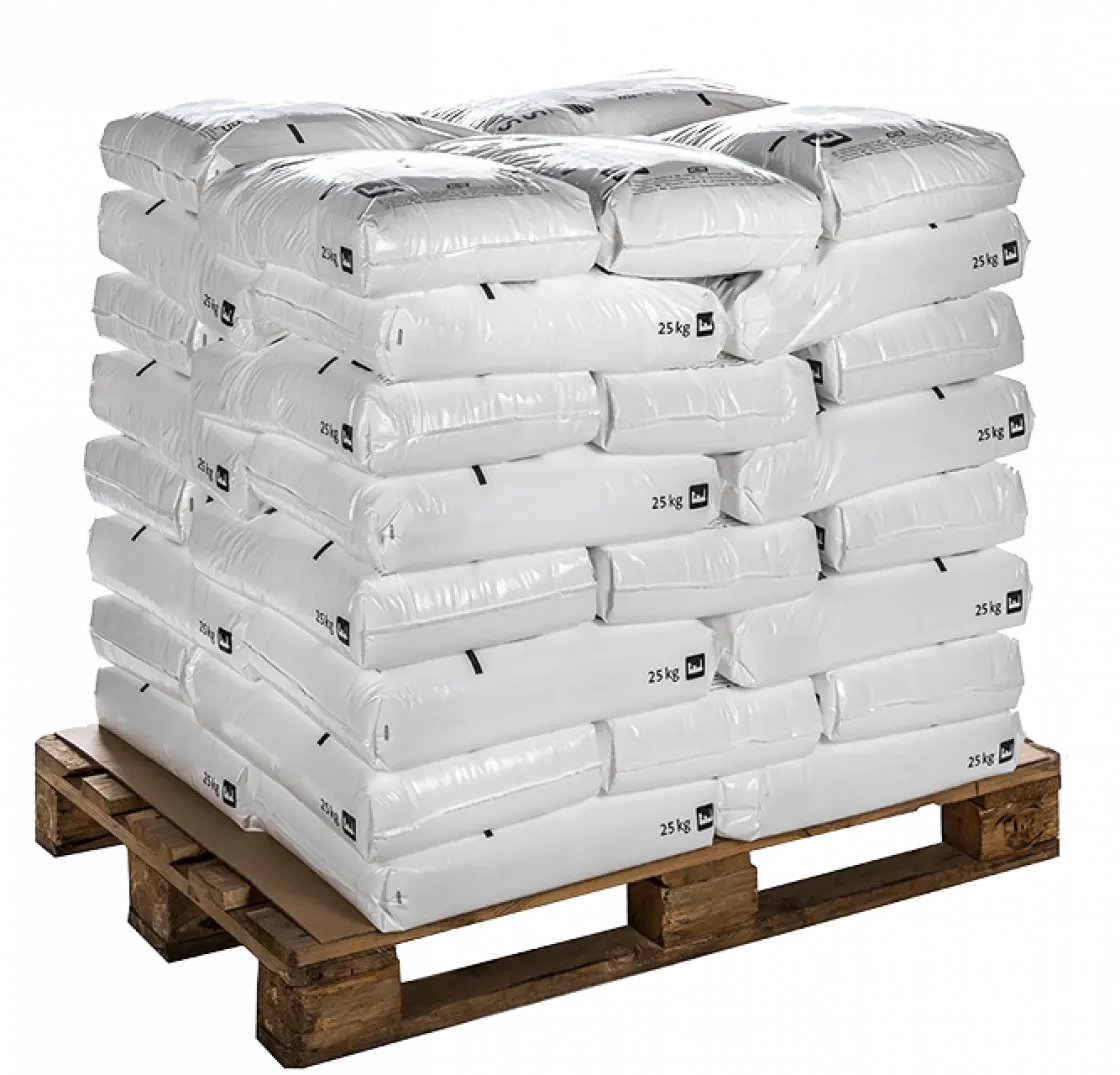
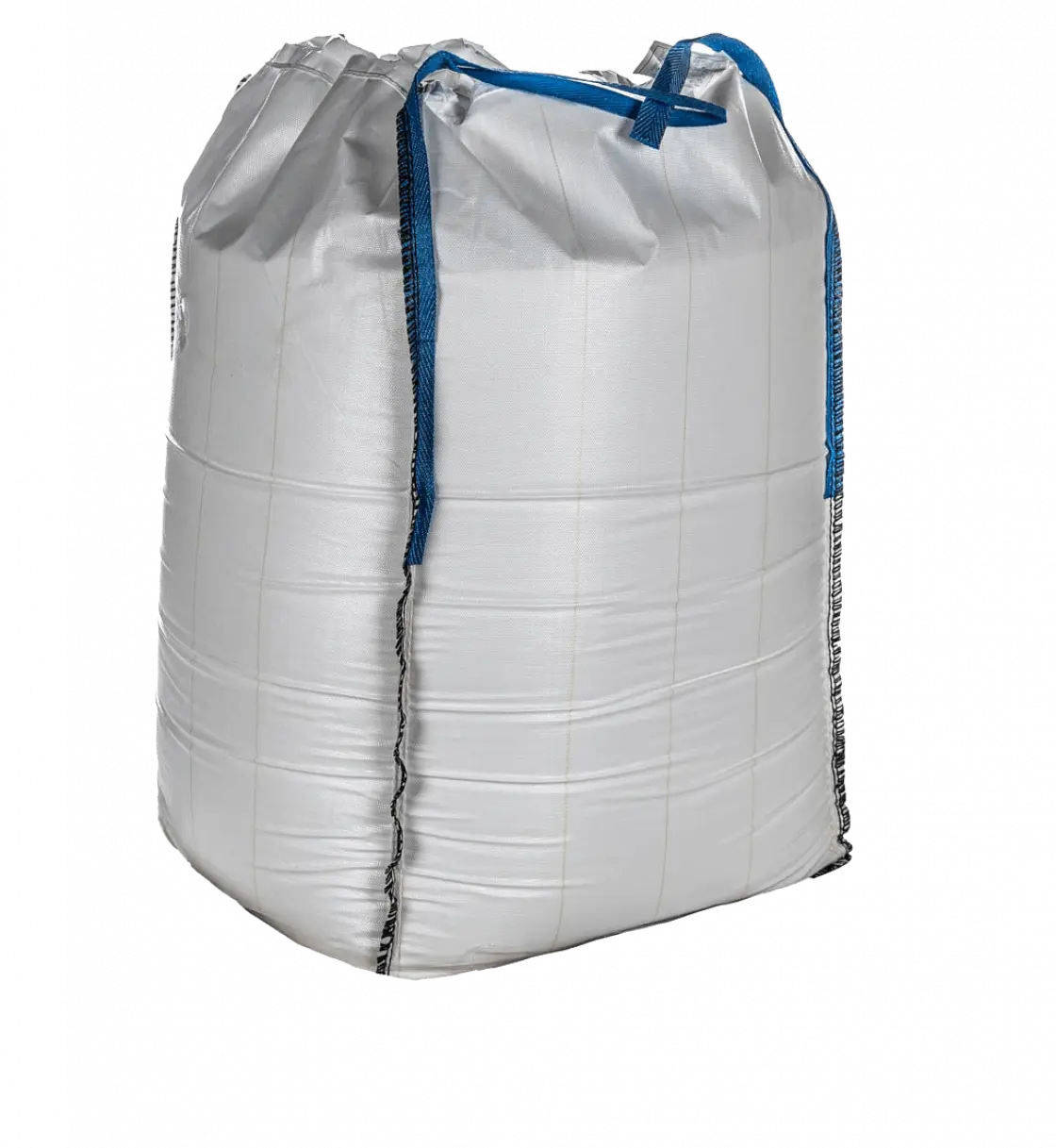
| Packaging | 25KG/bag |
| Sample | Test Samples Available (Click to Request Samples) |
| COA | View COA |
| Price | Get Quote |
| Supply Type | Bulk / Contract manufacturing / OEM |
| Shipping | FCL / LCL available |
| Payment Terms | Support FOB \ CIF \ EXW quotations, and accept Letter of Credit (L/C). |
| Manufacturer | Greenrock Chemical(China Factory) |






QUOTE TYPE
PACKAGING TYPE
TOTAL QUANTITY(KG)
PREFERRED SHIPPING METHOD
YOUR COMPANY
YOUR E-MAIL
Calculate Summary
Based on current marketvolatility and material availability.
Documents We Provide for 267221-88-5
Post-sale: Full documentation is provided.
To request documents, please contact us via email at sales@GRchemical.com.

Bulk 267221-88-5 Supplier from China
17+ years in chemical exports.Fully compliant, reliable supply.Your B2B partner in bulk chemical procurement.
Industrial Applications of 267221-88-5
| Industry | Application | Process |
|---|---|---|
| Organic Optoelectronic Materials | Hole-transport layer (HTL) material for OLEDs, enhancing device efficiency and stability | Film formation via vacuum thermal evaporation or solution spin-coating; used as a small-molecule HTL or as a host matrix in doped systems |
| Organic Synthesis | Boronic ester coupling reagent for Suzuki-Miyaura cross-coupling to construct conjugated architectures such as biphenyls and triarylamines | Coupling with aryl halides (e.g., bromobenzene, 1-iodonaphthalene) under basic conditions (Na₂CO₃/K₃PO₄), catalyzed by Pd(PPh₃)₄ or Pd(dppf)Cl₂ |
| Pharmaceutical Intermediates | Key building block for potential drug molecules containing triarylamine motifs (e.g., kinase inhibitors, antitumor candidates) | Introduction of a diphenylaminophenyl moiety via Suzuki coupling, followed by further functional group transformations (e.g., nitration, reduction, acylation) to assemble the active molecular scaffold |
Manufacturing Quality Control of 267221-88-5
| Test Item | Common Testing Method | Method Overview |
|---|---|---|
| Purity Analysis | High-Performance Liquid Chromatography (HPLC) | Uses a reversed-phase column with methanol/water or acetonitrile/water as the mobile phase, and UV detection (e.g., 254 nm) to quantify the main peak purity and assess impurity levels. |
| Structural Confirmation | Nuclear Magnetic Resonance Spectroscopy (NMR) | Utilizes ¹H NMR and ¹³C NMR to analyze chemical shifts of hydrogen and carbon atoms, confirming molecular structure and substitution positions. |
| Molecular Weight Confirmation | Mass Spectrometry (MS) | Employs ESI-MS or APCI-MS to determine the molecular ion peak, verifying that the molecular weight matches the theoretical value ([M+H]⁺ or [M+Na]⁺). |
| Impurity Identification | Liquid Chromatography-Mass Spectrometry (LC-MS) | Separates components via HPLC followed by MS detection, enabling identification and qualitative analysis of unknown impurities, aiding in the determination of synthetic by-products or degradation products. |
| Water Content | Karl Fischer Titration | Determines trace water content using either volumetric or coulometric methods, ensuring compliance with loss-on-drying or moisture limit requirements. |
| Residual Solvents | Gas Chromatography (GC) | Uses headspace or direct injection with FID detection to detect common organic solvent residues (e.g., toluene, THF, DMF) according to pharmacopoeial methods. |
| Melting Point Determination | Capillary Melting Point Apparatus | Measures the melting temperature range as a physical constant for preliminary identification and assessment of product consistency. |
| Appearance and Physical Properties | Visual Inspection and Microscopic Observation | Observes color, crystal form, particle morphology, and other physical characteristics to ensure conformity with standard descriptions (e.g., white to pale yellow crystalline powder). |
| Thermal Stability / Degradation Study | Accelerated Stability Testing + HPLC Monitoring | Stores samples under high temperature and humidity conditions, with periodic sampling and HPLC analysis to monitor changes in main component and formation of degradation products. |
| Chiral Purity (if applicable) | Chiral High-Performance Liquid Chromatography (Chiral HPLC) | If chiral centers are present, uses chiral columns to separate enantiomers and assess optical purity (ee value). |
Technical Specifications of 267221-88-5
| Test Item | Specification |
|---|---|
| Appearance | Off-white solid |
| Purity | >=98.0% (GC-MS) |
| Total Impurities | <=2.0% |
| Single Impurity | <=0.5% |
| Water Content (KF) | <=0.5% |
| Melting Point | 148–152°C |
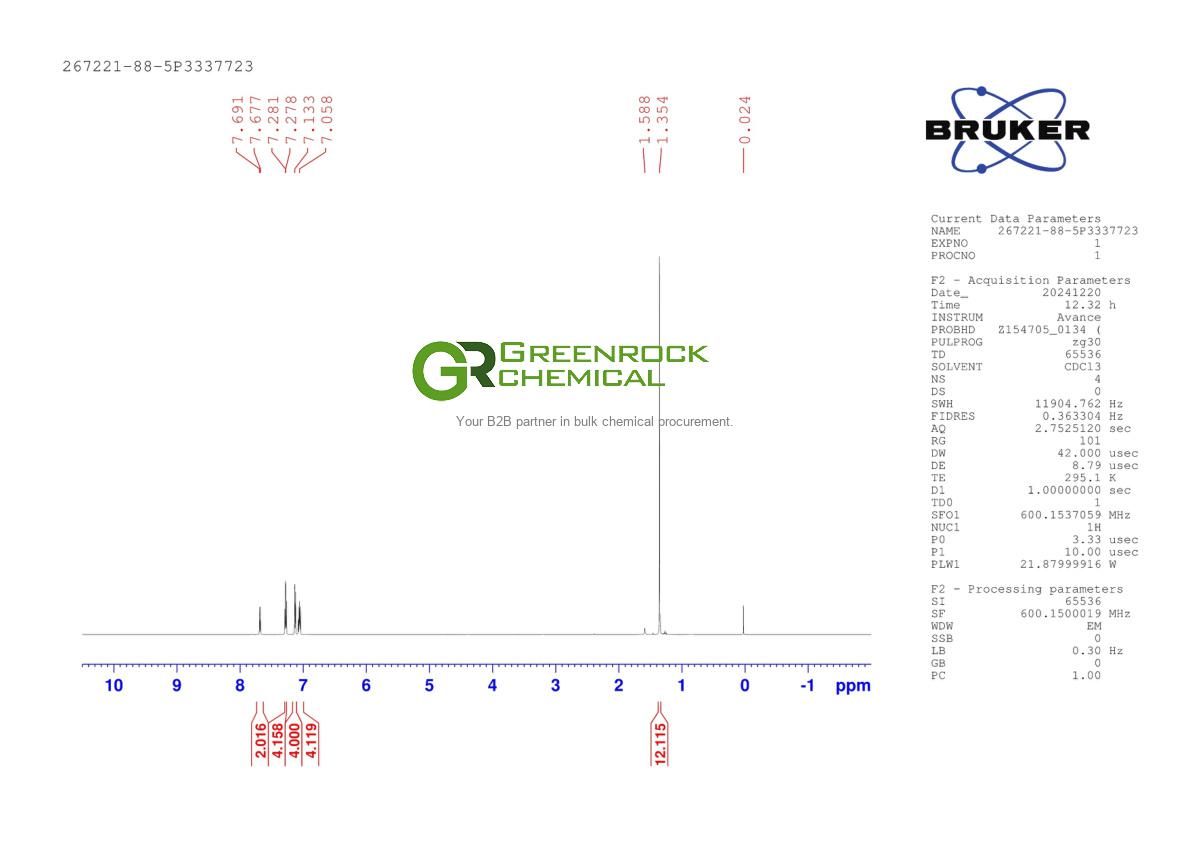
| Identification (NMR) | Conforms to reference spectrum |
| Residue on Ignition | <=0.1% |
 Specifications vary by industry. Reach out to our technical experts for a COA tailored specifically to your application. Email:selse@GRchemical.com
|
|
Download COA of 267221-88-5
| CAS/Product ID | *Required fields | |
| Lot/Batch Number | *Required fields | |
NMR Spectra of 267221-88-5

Packaging of 267221-88-5
Industrial 267221-88-5 Procurement FAQ
1. How do you ensure product quality consistency?
We rely on a mature China-based manufacturing system and implement strict batch control and quality inspection for every shipment. Our production process complies with ISO 9001 standards, and a COA is provided for each batch to ensure consistent and reliable quality.
2. Do you offer competitive pricing for bulk orders?
Yes, as a China-based manufacturer and bulk supplier, we provide tiered pricing based on order volume. We support FOB and CIF quotations, as well as L/C payment terms for large transactions to meet international trade requirements.
3. Can you support large-volume or long-term supply?
We have stable production capacity and a well-established supply chain, enabling continuous bulk supply. We support ton-level and container-level orders, as well as long-term cooperation projects.
4. What is your typical lead time?
For in-stock products, shipment can be arranged within 1–3 days. For bulk packaging or customized orders, lead time depends on the specific quantity and production schedule.
5. What documents do you provide?
We can provide complete documentation upon request, including COA, SDS, TDS, and other compliance certificates, meeting industrial procurement and export requirements.
6. Can you customize product specifications or packaging?
Yes, we support customization of parameters such as purity, impurities, residual solvents, and heavy metals. We also offer various bulk packaging options, including 25kg bags, drums, and IBC tanks, suitable for industrial applications and transportation.
7. What shipping options do you support?
We support both FCL (Full Container Load) and LCL (Less than Container Load) shipments, and can flexibly arrange logistics solutions based on order size to meet bulk chemical export needs.
8. Do you provide technical or application support?
Yes, we provide basic application guidance and technical support based on industry experience to help customers optimize product usage.
9. How do you handle compliance and export regulations?
We are familiar with international trade and export regulations, ensuring all products comply with relevant requirements. We also provide complete documentation to support smooth customs clearance and global delivery.
Use Bulk
Supply Factory
Direct ISO 9001
Certified Samples
Available Stable
Supply