ETHYL N-[4-(METHYLAMINO)-3-NITROBENZOYL]-N-PYRIDIN-2-YL-SS-ALANINATE Bulk Supply for Industrial Use
China Factory Direct
 |
|
| CAS number | 429659-01-8 |
| Product name | ETHYL N-[4-(METHYLAMINO)-3-NITROBENZOYL]-N-PYRIDIN-2-YL-SS-ALANINATE |
| Stock | Stock readily available; annual supply capacity exceeding 1,000 tons. |
| Grade | Industrial Grade |
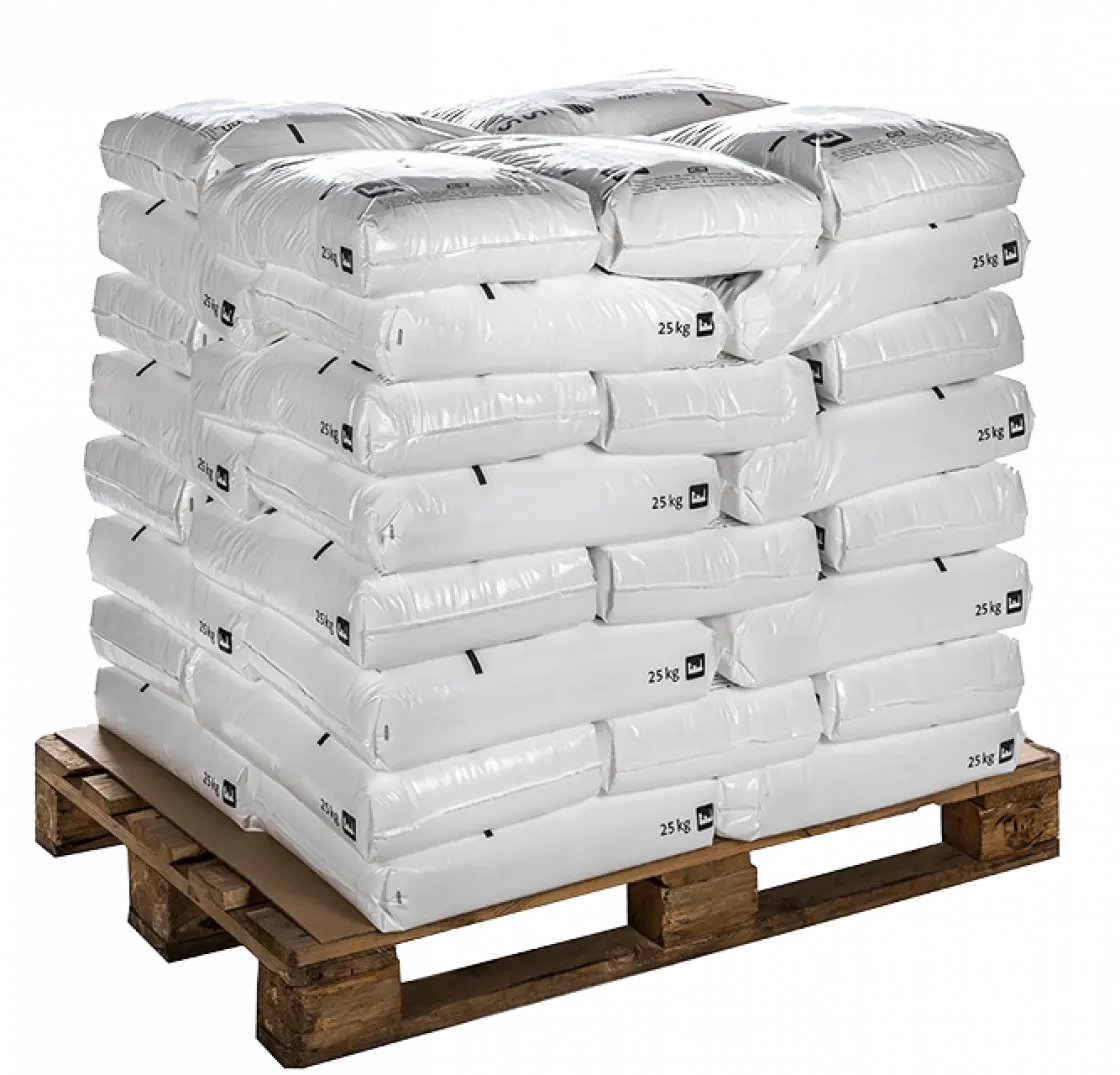
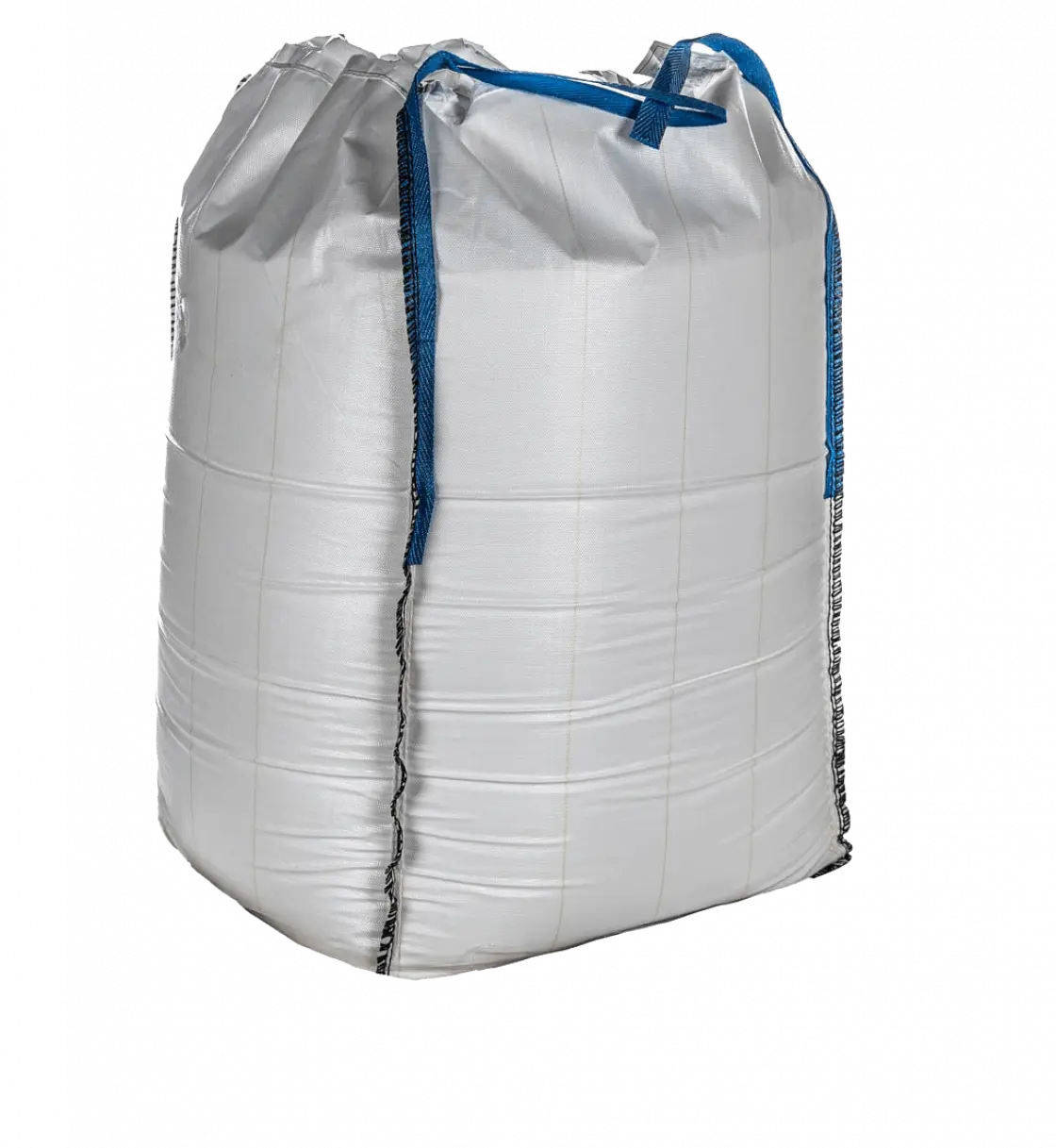
| Packaging | 25KG/bag500KG/bag1000KG/bag |
| Sample | Test Samples Available (Click to Request Samples) |
| COA | View COA |
| Price | Get Quote |
| Supply Type | Bulk / Contract manufacturing / OEM |
| Shipping | FCL / LCL available |
| Payment Terms | Support FOB \ CIF \ EXW quotations, and accept Letter of Credit (L/C). |
| Manufacturer | Greenrock Chemical(China Factory) |






QUOTE TYPE
PACKAGING TYPE
TOTAL QUANTITY(KG)
PREFERRED SHIPPING METHOD
YOUR COMPANY
YOUR E-MAIL
Calculate Summary
Based on current marketvolatility and material availability.
Documents We Provide for 429659-01-8
Post-sale: Full documentation is provided.
To request documents, please contact us via email at sales@GRchemical.com.

Bulk 429659-01-8 Supplier from China
17+ years in chemical exports.Fully compliant, reliable supply.Your B2B partner in bulk chemical procurement.
Industrial Applications of 429659-01-8
| Industry | Application | Process |
|---|---|---|
| Pharmaceutical R&D | Experimental antitumor compound; candidate kinase inhibitor | Synthesis and structural optimization of lead compounds for in vitro cellular activity screening and in vivo pharmacodynamic evaluation |
Manufacturing Quality Control of 429659-01-8
| Test Item | Common Testing Methods | Method Overview |
|---|---|---|
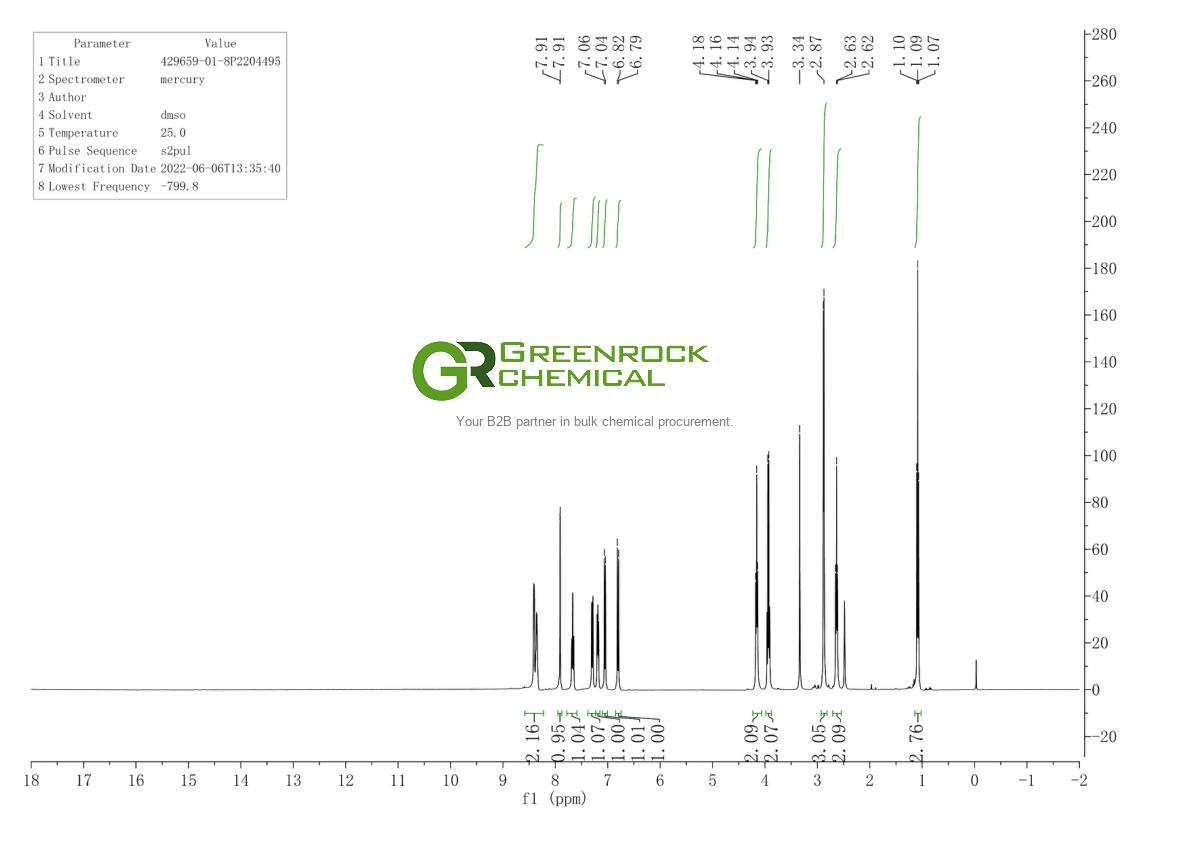
| Structural Confirmation | Nuclear Magnetic Resonance Spectroscopy (¹H-NMR, ¹³C-NMR) | Analyzes the chemical shifts, coupling constants, and integration ratios of protons and carbon atoms in the molecule using hydrogen and carbon spectra to confirm the molecular skeleton, substituent positions, and configuration. It is considered the gold standard for structural identification. |
| High-Resolution Mass Spectrometry (HR-MS) | Determines the precise mass number of the molecular ion peak using high-accuracy mass spectrometry, compares it with the theoretical molecular formula (e.g., C₁₇H₁₉N₃O₅), and confirms the molecular formula while excluding isomer interference. | |
| Purity Testing | High-Performance Liquid Chromatography (HPLC) | Uses a C18 reverse-phase column with water-acetonitrile or methanol as the mobile phase for gradient elution. A UV detector (e.g., 254 nm) detects the main peak area to calculate the purity of the main component (typically ≥98%). It can detect trace impurities. |
| Ultra-Performance Liquid Chromatography (UPLC) | Operates on the same principle as HPLC but uses smaller particle size packing (<2 μm) to improve separation efficiency and detection sensitivity, suitable for complex impurity profile analysis. | |
| Content Determination | HPLC/UPLC-UV Method | Uses external or internal standard methods, establishing a standard curve with a known concentration standard. Quantifies the target compound content by the main peak area, meeting pharmacopoeia requirements (e.g., ChP, USP). |
| Related Substances Test | HPLC/UPLC-MS Combined Method | Couples HPLC with mass spectrometry detection to preliminarily identify impurities (e.g., degradation products, by-products). Identifies impurities such as deacetylation, nitro reduction, hydrolysis, etc. |
| Thin-Layer Chromatography (TLC) | A rapid screening method using silica gel plates with optimized solvent systems such as toluene:ethyl acetate:methanol. Spots are visualized under UV light or with color-developing agents like iodine vapor, suitable for process monitoring. | |
| Moisture Content Determination | Karl Fischer Titration | Accurately determines the moisture content in the sample (usually ≤0.5%), avoiding effects from hydrolysis or water of crystallization on stability and content. |
| Residual Solvent Detection | Gas Chromatography (GC) | Uses headspace or direct injection with columns such as DB-624 or PLOT to separate residual organic solvents like ethanol, ethyl acetate, DMF, and acetone. Follows ICH Q3C limits for control. |
| Melting Point Determination | Capillary Melting Point Apparatus | Determines the melting point range (e.g., 185–189°C) as a physical constant for identification and purity assessment. Pure substances have a narrow melting range (≤2°C). |
| Heavy Metal Detection | Atomic Absorption Spectroscopy (AAS) or Inductively Coupled Plasma Mass Spectrometry (ICP-MS) | Detects toxic heavy metals such as lead, cadmium, mercury, and arsenic to ensure compliance with pharmaceutical standards (e.g., ICH Q3D), especially in API production. |
| Infrared Spectroscopy (IR) | Fourier Transform Infrared Spectroscopy (FT-IR) | Obtains characteristic absorption peaks of functional groups (e.g., C=O amide, NO₂, C–N, ester groups) and compares them with standard spectra for rapid identification and batch consistency checks. |
Technical Specifications of 429659-01-8
| Test Item | Specification |
|---|---|
| Appearance | White to almost white powder or crystals |
| Purity | >=98.5% (LC-MS) |
| Total Impurities | <=1.5% |
| Single Impurity | <=0.5% |
| Water Content (KF) | <=0.5% |
| Melting Point | 142–146°C |
| Identification (NMR) | Consistent with structure |
| Heavy Metals | <=20 ppm |
 Specifications vary by industry. Reach out to our technical experts for a COA tailored specifically to your application. Email:selse@GRchemical.com
|
|
Download COA of 429659-01-8
| CAS/Product ID | *Required fields | |
| Lot/Batch Number | *Required fields | |
NMR Spectra of 429659-01-8
Packaging of 429659-01-8
Industrial 429659-01-8 Procurement FAQ
1. How do you ensure product quality consistency?
We rely on a mature China-based manufacturing system and implement strict batch control and quality inspection for every shipment. Our production process complies with ISO 9001 standards, and a COA is provided for each batch to ensure consistent and reliable quality.
2. Do you offer competitive pricing for bulk orders?
Yes, as a China-based manufacturer and bulk supplier, we provide tiered pricing based on order volume. We support FOB and CIF quotations, as well as L/C payment terms for large transactions to meet international trade requirements.
3. Can you support large-volume or long-term supply?
We have stable production capacity and a well-established supply chain, enabling continuous bulk supply. We support ton-level and container-level orders, as well as long-term cooperation projects.
4. What is your typical lead time?
For in-stock products, shipment can be arranged within 1–3 days. For bulk packaging or customized orders, lead time depends on the specific quantity and production schedule.
5. What documents do you provide?
We can provide complete documentation upon request, including COA, SDS, TDS, and other compliance certificates, meeting industrial procurement and export requirements.
6. Can you customize product specifications or packaging?
Yes, we support customization of parameters such as purity, impurities, residual solvents, and heavy metals. We also offer various bulk packaging options, including 25kg bags, drums, and IBC tanks, suitable for industrial applications and transportation.
7. What shipping options do you support?
We support both FCL (Full Container Load) and LCL (Less than Container Load) shipments, and can flexibly arrange logistics solutions based on order size to meet bulk chemical export needs.
8. Do you provide technical or application support?
Yes, we provide basic application guidance and technical support based on industry experience to help customers optimize product usage.
9. How do you handle compliance and export regulations?
We are familiar with international trade and export regulations, ensuring all products comply with relevant requirements. We also provide complete documentation to support smooth customs clearance and global delivery.
Use Bulk
Supply Factory
Direct ISO 9001
Certified Samples
Available Stable
Supply