Calcium folinatc Bulk Supply for Industrial Use
China Factory Direct
 |
|
| CAS number | 6035-45-6 |
| Product name | Calcium folinatc |
| Stock | Stock readily available; annual supply capacity exceeding 1,000 tons. |
| Grade | Pharmaceutical Grade |
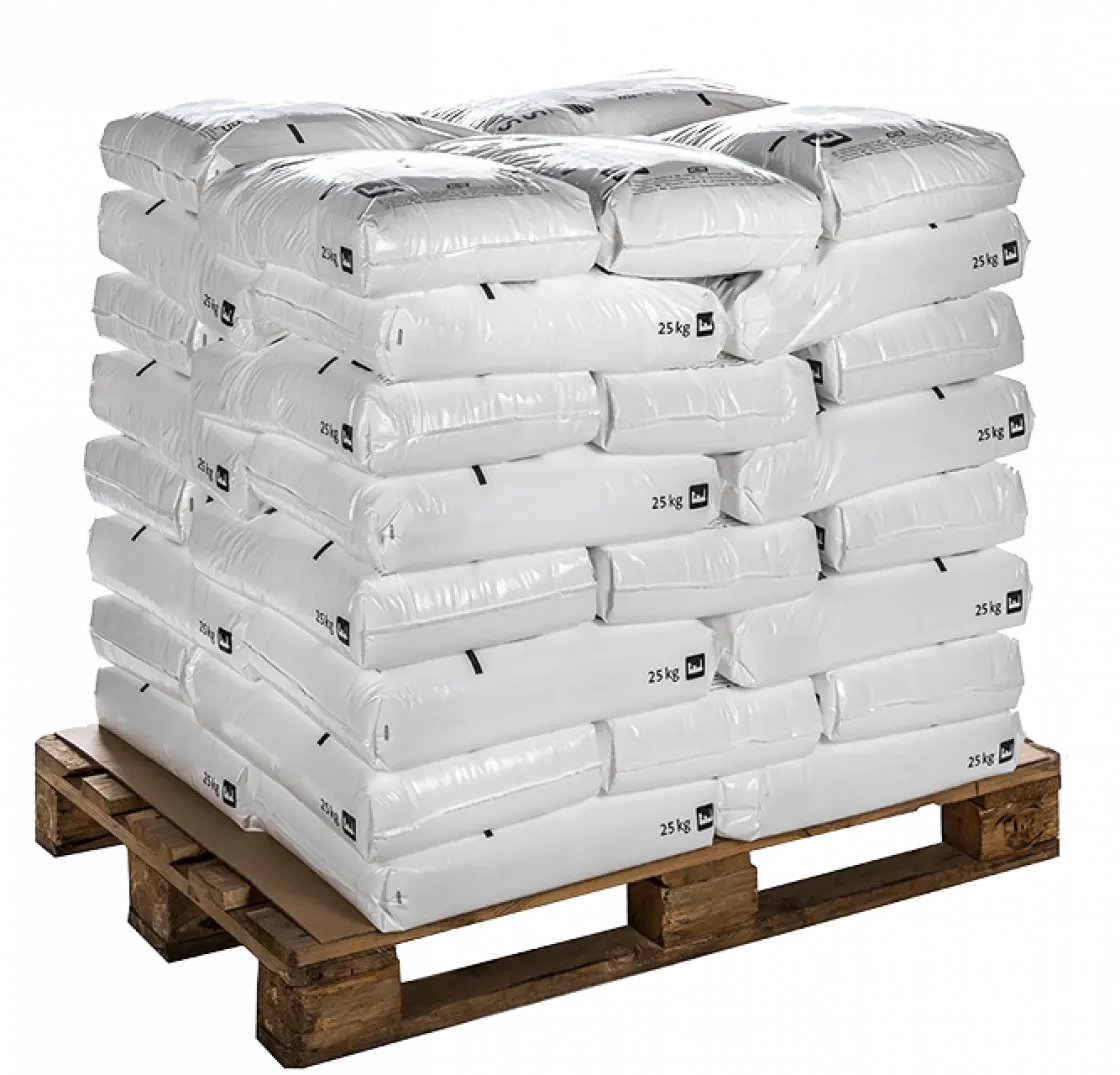
| Packaging | 25KG/bag |
| Sample | Test Samples Available (Click to Request Samples) |
| COA | View COA |
| Price | Get Quote |
| Supply Type | Bulk / Contract manufacturing / OEM |
| Shipping | FCL / LCL available |
| Payment Terms | Support FOB \ CIF \ EXW quotations, and accept Letter of Credit (L/C). |
| Manufacturer | Greenrock Chemical(China Factory) |






QUOTE TYPE
PACKAGING TYPE
TOTAL QUANTITY(KG)
PREFERRED SHIPPING METHOD
YOUR COMPANY
YOUR E-MAIL
Calculate Summary
Based on current marketvolatility and material availability.
Documents We Provide for Calcium folinatc
Post-sale: Full documentation is provided.
To request documents, please contact us via email at sales@GRchemical.com.
Bulk Calcium folinatc Supplier from China
17+ years in chemical exports.Fully compliant, reliable supply.Your B2B partner in bulk chemical procurement.
Industrial Applications of Calcium folinatc
| Industry | Application | Process |
|---|---|---|
| Pharmaceuticals | Antidote for overdose or toxicity of folate antagonists (e.g., methotrexate) | Administered intravenously or orally to supply biologically active tetrahydrofolate, bypassing inhibited dihydrofolate reductase and restoring purine and pyrimidine synthesis |
| Pharmaceuticals | Adjunct to enhance the antitumor efficacy of 5-fluorouracil (5-FU) | Co-administered intravenously with 5-FU; calcium leucovorin stabilizes and potentiates the binding of 5-FU metabolite FdUMP to thymidylate synthase, prolonging enzyme inhibition |
| Pharmaceuticals | Treatment of folate-deficiency megaloblastic anemia (particularly in cases of malabsorption or metabolic impairment) | Administered orally or intramuscularly to directly supply physiologically active L-leucovorin (6S-leucovorin calcium), eliminating the need for conversion by dihydrofolate reductase |
Manufacturing Quality Control of Calcium folinatc
| Test Item | Common Testing Methods | Method Overview |
|---|---|---|
| Content Determination (Active Pharmaceutical Ingredient Analysis) | High-Performance Liquid Chromatography (HPLC) | Reverse-phase HPLC (RP-HPLC) is employed using a C18 column as the stationary phase and ultraviolet detection (UV, typically at 254 nm or 270 nm). Quantitative analysis is achieved by comparing peak areas with those of reference standards. This method offers high sensitivity, accuracy, and reproducibility, making it the preferred choice for determining calcium folinate content. |
| Purity Testing | High-Performance Liquid Chromatography (HPLC) | Used to detect related substances in calcium folinate, such as degradation products and synthetic intermediates. By optimizing mobile phase composition and gradient elution programs, impurities are effectively separated and quantified, ensuring product purity meets pharmacopoeial requirements (e.g., Chinese Pharmacopoeia, USP). |
| Acidity and Alkalinity (pH) | pH Meter Method | A suitable amount of sample is dissolved in water, and the pH of the solution is measured using a calibrated pH meter. The result should fall within the specified range (typically 6.0–8.0), reflecting the formulation's stability and compatibility. |
| Drying Loss | Drying Method (Constant Weight Method) | The sample is dried in an oven at 105°C until constant weight is achieved. The percentage of weight loss is calculated to assess moisture content, which must be controlled within specified limits (generally ≤1.0%) to prevent moisture absorption that could compromise stability. |
| Heavy Metal Testing | Atomic Absorption Spectroscopy (AAS) or Inductively Coupled Plasma Mass Spectrometry (ICP-MS) | After acid digestion, trace metals such as lead, cadmium, and mercury are quantified using AAS or ICP-MS. Results must remain below pharmacopoeial limits (e.g., lead ≤10 ppm) to ensure safety. |
| Microbial Limits Testing | Colony Counting (Total Aerobic Microorganisms, Molds and Yeasts), and Control Organism Testing | Performed according to the microbial limits test procedures in the Chinese Pharmacopoeia, including total aerobic bacteria count, mold and yeast count, and tests for control organisms such as Salmonella and Escherichia coli, ensuring absence of pathogenic microbial contamination. |
| Pyrogen Test (Bacterial Endotoxin) | Limulus Amebocyte Lysate (LAL) Assay (Kinetic Turbidimetric or Chromogenic Method) | Used to test injectable calcium folinate for endotoxins via the LAL reagent. According to Chinese Pharmacopoeia standards, endotoxin levels must be below the specified limit (e.g., <5.0 EU/mg) to prevent febrile reactions. |
| Dissolution Testing (for injections or tablets) | Ultraviolet-Visible Spectrophotometry (UV-Vis) or HPLC | Simulates in vivo release conditions in a specific medium (e.g., phosphate buffer). The amount dissolved at a given time is measured and compared against a reference standard curve to evaluate whether the formulation’s release profile meets specifications. |
| Polymorphism and Water of Crystallization Analysis | X-Ray Diffraction (XRD) | Used to confirm the crystal structure of calcium folinate remains stable, identify potential polymorphic forms, and prevent changes in solubility and bioavailability due to polymorphic transitions. |
| Residual Solvent Testing | Gas Chromatography (GC) | Using headspace injection or direct injection with capillary columns and flame ionization detection (FID), this method detects residual organic solvents (e.g., ethanol, acetone, dichloromethane) from manufacturing processes, ensuring compliance with ICH Q3C guidelines. |
Technical Specifications of Calcium folinatc
| Test Item | Specification |
|---|---|
| Appearance | Off-white crystalline solid |
| Purity | >=98.0% |
| Water Content (KF) | <=0.5% |
| Total Impurities | <=2.0% |
| Single Impurity | <=0.5% |
| Residue on Ignition | <=0.1% |
| Optical Rotation | +14.0 to +15.8 deg (c=1, H2O) |
| Heavy Metals | <=10 ppm |
 Specifications vary by industry. Reach out to our technical experts for a COA tailored specifically to your application. Email:selse@GRchemical.com
|
|
Download COA of Calcium folinatc
| CAS/Product ID | *Required fields | |
| Lot/Batch Number | *Required fields | |
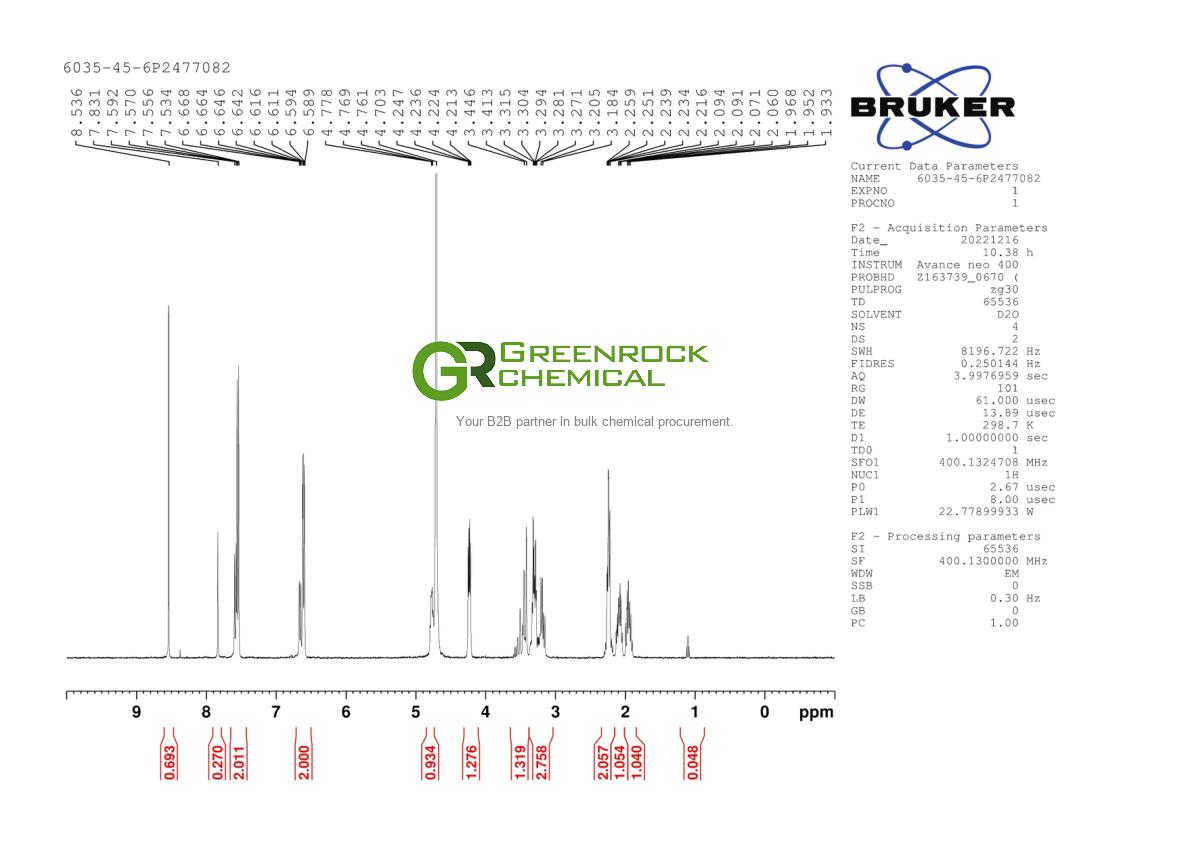
NMR Spectra of Calcium folinatc


Packaging of Calcium folinatc
Industrial Calcium folinatc Procurement FAQ
1. How do you ensure product quality consistency?
We rely on a mature China-based manufacturing system and implement strict batch control and quality inspection for every shipment. Our production process complies with ISO 9001 standards, and a COA is provided for each batch to ensure consistent and reliable quality.
2. Do you offer competitive pricing for bulk orders?
Yes, as a China-based manufacturer and bulk supplier, we provide tiered pricing based on order volume. We support FOB and CIF quotations, as well as L/C payment terms for large transactions to meet international trade requirements.
3. Can you support large-volume or long-term supply?
We have stable production capacity and a well-established supply chain, enabling continuous bulk supply. We support ton-level and container-level orders, as well as long-term cooperation projects.
4. What is your typical lead time?
For in-stock products, shipment can be arranged within 1–3 days. For bulk packaging or customized orders, lead time depends on the specific quantity and production schedule.
5. What documents do you provide?
We can provide complete documentation upon request, including COA, SDS, TDS, and other compliance certificates, meeting industrial procurement and export requirements.
6. Can you customize product specifications or packaging?
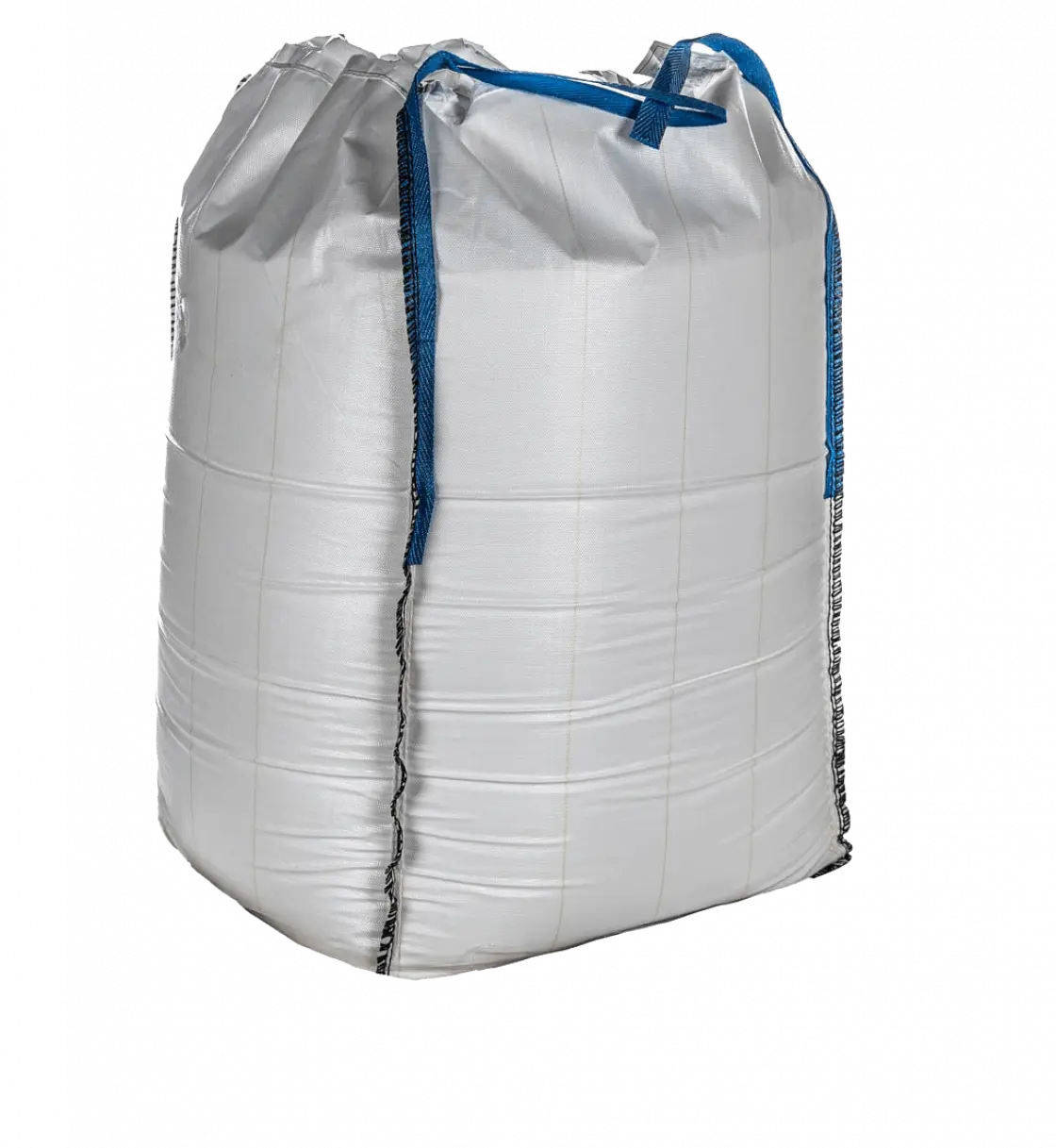
Yes, we support customization of parameters such as purity, impurities, residual solvents, and heavy metals. We also offer various bulk packaging options, including 25kg bags, drums, and IBC tanks, suitable for industrial applications and transportation.
7. What shipping options do you support?
We support both FCL (Full Container Load) and LCL (Less than Container Load) shipments, and can flexibly arrange logistics solutions based on order size to meet bulk chemical export needs.
8. Do you provide technical or application support?
Yes, we provide basic application guidance and technical support based on industry experience to help customers optimize product usage.
9. How do you handle compliance and export regulations?
We are familiar with international trade and export regulations, ensuring all products comply with relevant requirements. We also provide complete documentation to support smooth customs clearance and global delivery.
Use Bulk
Supply Factory
Direct ISO 9001
Certified Samples
Available Stable
Supply