L-xylose Bulk Supply for Industrial Use
China Factory Direct
 |
|
| CAS number | 609-06-3 |
| Product name | L-xylose |
| Stock | Stock readily available; annual supply capacity exceeding 1,000 tons. |
| Grade | Pharmaceutical GradeIndustrial GradeSpecialty Grade |
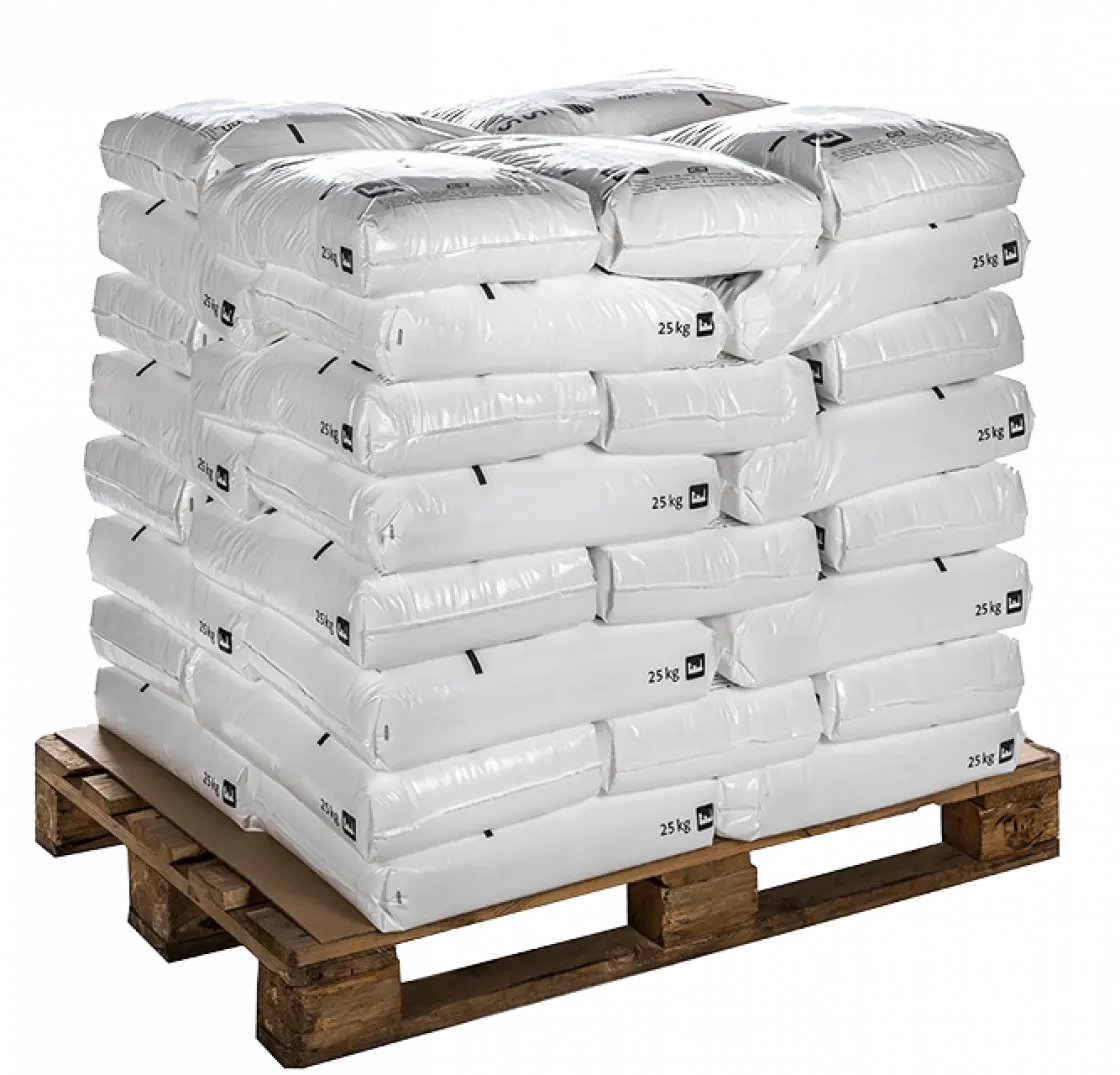
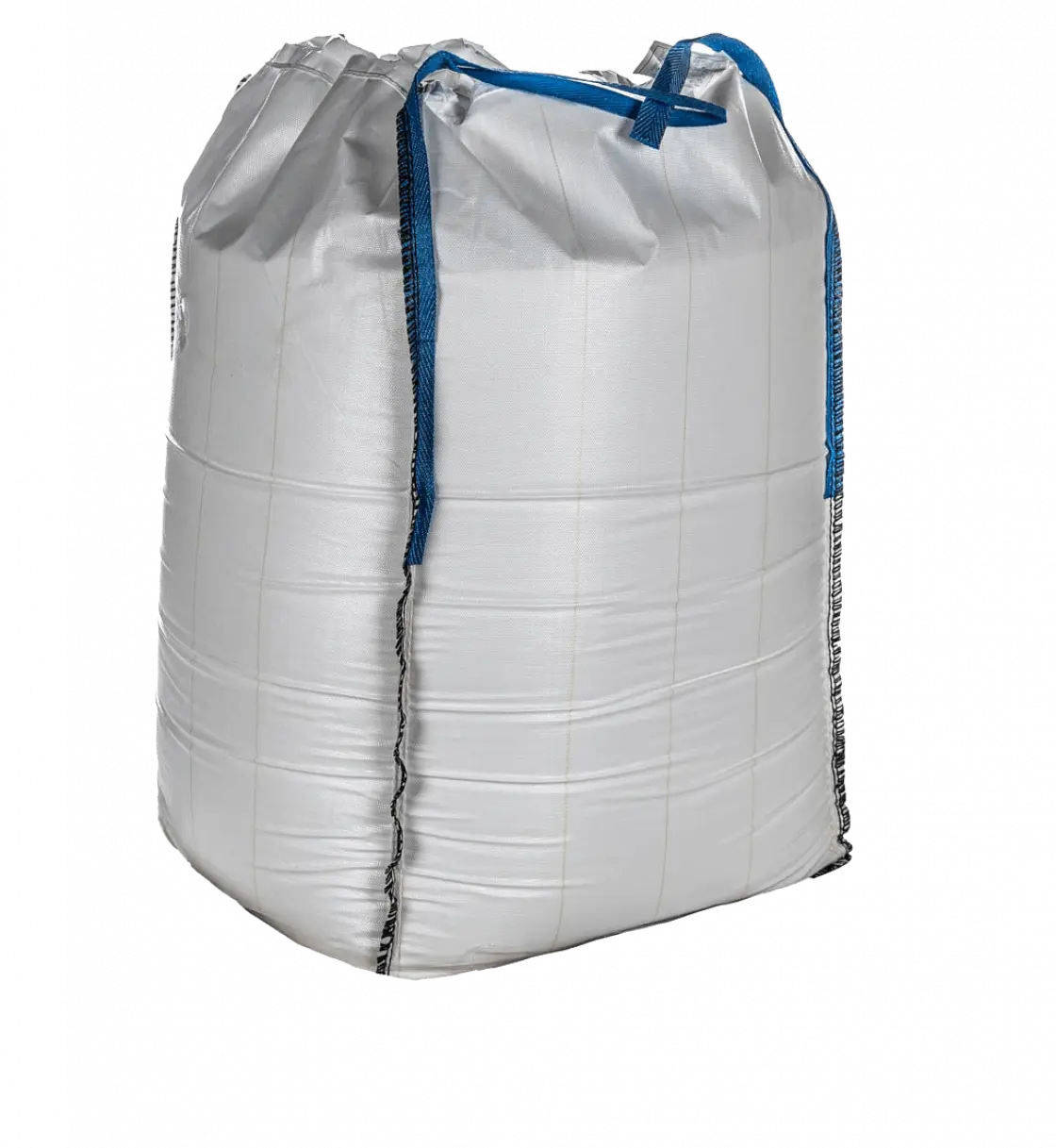
| Packaging | 25KG/bag500KG/bag1000KG/bag |
| Sample | Test Samples Available (Click to Request Samples) |
| COA | View COA |
| Price | Get Quote |
| Supply Type | Bulk / Contract manufacturing / OEM |
| Shipping | FCL / LCL available |
| Payment Terms | Support FOB \ CIF \ EXW quotations, and accept Letter of Credit (L/C). |
| Manufacturer | Greenrock Chemical(China Factory) |






QUOTE TYPE
PACKAGING TYPE
TOTAL QUANTITY(KG)
PREFERRED SHIPPING METHOD
YOUR COMPANY
YOUR E-MAIL
Calculate Summary
Based on current marketvolatility and material availability.
Documents We Provide for L-xylose
Post-sale: Full documentation is provided.
To request documents, please contact us via email at sales@GRchemical.com.
Bulk L-xylose Supplier from China
17+ years in chemical exports.Fully compliant, reliable supply.Your B2B partner in bulk chemical procurement.
Industrial Applications of L-xylose
| Industry | Applications | Processing |
|---|---|---|
| Food Industry | Sweetener, dietary fiber additive, low-calorie sweetener alternative | Directly incorporated into beverages, dairy products, baked goods, and dietary supplements; commonly blended with other sweeteners to enhance taste profile |
| Pharmaceutical Industry | Intestinal health modulator, prebiotic, pharmaceutical excipient (e.g., tablet filler) | Used in the preparation of prebiotic formulations; serves as a matrix material in sustained-release formulations; functions as a diluent and disintegrant enhancer in oral solid dosage forms |
| Biotechnology | Component of microbial growth media, substrate for enzymatic reactions (e.g., xylose isomerase and xylose reductase studies) | Formulated into selective media for screening xylose-metabolizing strains; employed as a standard substrate in in vitro enzyme kinetic assays |
| Chemical Intermediates | Precursor for synthesis of L-arabinose, xylitol, and furan derivatives | Hydrogenated catalytically to produce xylitol; dehydrated acid-catalyzed to yield furfural; converted chemically or biologically into high-value chiral chemicals |
Manufacturing Quality Control of L-xylose
| Detection Item | Common Detection Methods | Method Overview |
|---|---|---|
| Identification Test | Infrared Spectroscopy (IR) | By measuring the infrared absorption spectrum of the sample and comparing it with the standard L-(-)-xylose spectrum, confirming whether the characteristic peaks (such as hydroxyl and aldehyde groups) are consistent. |
| Chemical Color Reaction | Using xylose reacting with resorcinol in concentrated hydrochloric acid to produce a red product (Seliwanoff reaction), used to distinguish ketoses from aldoses; L-xylose, as an aldopentose, reacts slowly, which can be used as an auxiliary identification method. | |
| Content Determination | High-Performance Liquid Chromatography (HPLC) | Using a differential refractometer (RID) or evaporative light scattering detector (ELSD), with amino column or carbohydrate-specific column for separation, and quantifying L-(-)-xylose using external standard or internal standard methods. |
| Optical Rotation Method | Utilizing the specific specific rotation ([α]D²⁰ ≈ -18° to -20°) of L-(-)-xylose, calculating its concentration and purity by measuring the optical rotation of the solution. This is suitable for rapid determination of high-purity samples. | |
| Drying Loss | Drying Loss Method | Weighing the sample at 105°C until constant weight is reached, calculating the percentage of mass loss to assess water content and volatile substances. |
| Residue on Ignition | High-Temperature Ignition Method | The sample is burned at high temperature (typically 700–800°C), and the mass of the residual inorganic matter is measured, reflecting the total amount of inorganic impurities. |
| Heavy Metals | Thioacetamide Colorimetric Method (or Atomic Absorption Spectroscopy) | Under weakly acidic conditions, heavy metal ions react with thioacetamide to form colored sulfide precipitates, which are compared with standard lead solutions via colorimetry; atomic absorption spectroscopy (AAS) can also be used for precise determination of lead, arsenic, and other elements. |
| Specific Rotation | Polarimeter Measurement | Prepare a solution of a certain concentration in water, measure the optical rotation at a specified temperature (usually 20°C) and wavelength (sodium D line, 589 nm) using a polarimeter, and calculate the specific rotation to verify optical purity and configuration. |
| pH Value | pH Meter Measurement | Prepare a solution of a certain concentration (e.g., 10%), and directly measure its acidity or alkalinity using a calibrated pH meter, reflecting the presence of acidic impurities or degradation products. |
| Reducing Sugars | Fehling's Reagent Titration (or DNS Colorimetric Method) | L-xylose, as a reducing pentose, can reduce Cu²⁺ in Fehling’s reagent to Cu⁺, and the reducing capacity is determined by titration or colorimetry, indirectly reflecting the main component content and impurity levels. |
Technical Specifications of L-xylose
| Test Item | Specification |
|---|---|
| Appearance | White to almost white powder or crystals |
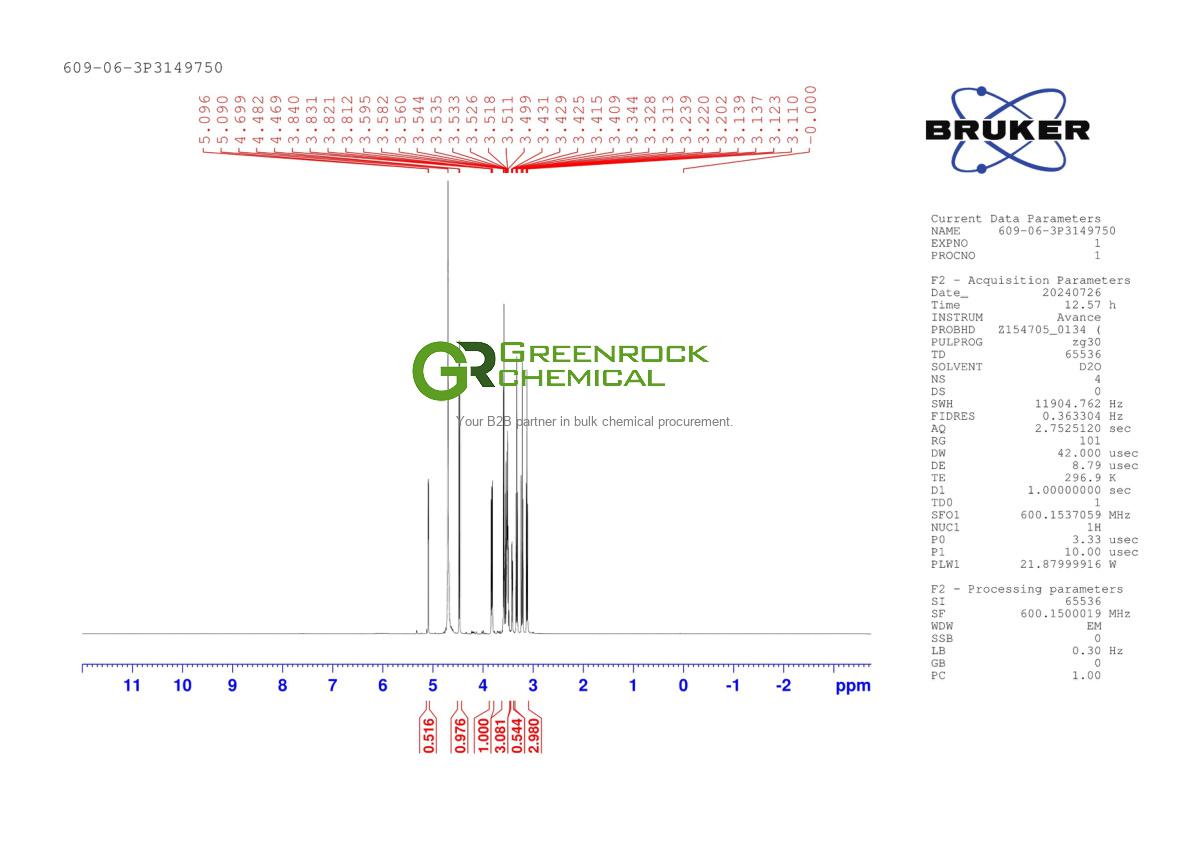
| Purity | >=98.0% (NMR) |
| Optical Rotation | -21.0 to -18.0 deg (c=10, H2O) |
| Water Content (KF) | <=0.5% |
| Melting Point | 148 to 152 °C |
| Residue on Ignition | <=0.1% |
| Heavy Metals | <=10 ppm |
| Total Impurities | <=2.0% |
| Single Impurity | <=0.5% |
 Specifications vary by industry. Reach out to our technical experts for a COA tailored specifically to your application. Email:selse@GRchemical.com
|
|
Download COA of L-xylose
| CAS/Product ID | *Required fields | |
| Lot/Batch Number | *Required fields | |
NMR Spectra of L-xylose

Packaging of L-xylose
Industrial L-xylose Procurement FAQ
1. How do you ensure product quality consistency?
We rely on a mature China-based manufacturing system and implement strict batch control and quality inspection for every shipment. Our production process complies with ISO 9001 standards, and a COA is provided for each batch to ensure consistent and reliable quality.
2. Do you offer competitive pricing for bulk orders?
Yes, as a China-based manufacturer and bulk supplier, we provide tiered pricing based on order volume. We support FOB and CIF quotations, as well as L/C payment terms for large transactions to meet international trade requirements.
3. Can you support large-volume or long-term supply?
We have stable production capacity and a well-established supply chain, enabling continuous bulk supply. We support ton-level and container-level orders, as well as long-term cooperation projects.
4. What is your typical lead time?
For in-stock products, shipment can be arranged within 1–3 days. For bulk packaging or customized orders, lead time depends on the specific quantity and production schedule.
5. What documents do you provide?
We can provide complete documentation upon request, including COA, SDS, TDS, and other compliance certificates, meeting industrial procurement and export requirements.
6. Can you customize product specifications or packaging?
Yes, we support customization of parameters such as purity, impurities, residual solvents, and heavy metals. We also offer various bulk packaging options, including 25kg bags, drums, and IBC tanks, suitable for industrial applications and transportation.
7. What shipping options do you support?
We support both FCL (Full Container Load) and LCL (Less than Container Load) shipments, and can flexibly arrange logistics solutions based on order size to meet bulk chemical export needs.
8. Do you provide technical or application support?
Yes, we provide basic application guidance and technical support based on industry experience to help customers optimize product usage.
9. How do you handle compliance and export regulations?
We are familiar with international trade and export regulations, ensuring all products comply with relevant requirements. We also provide complete documentation to support smooth customs clearance and global delivery.
Use Bulk
Supply Factory
Direct ISO 9001
Certified Samples
Available Stable
Supply